Anesthesia Protocols
Paula Gogola
Olbram Pavlíček
June 6 — July 11, 2026
Exhibition text by Aleksei Borisionok
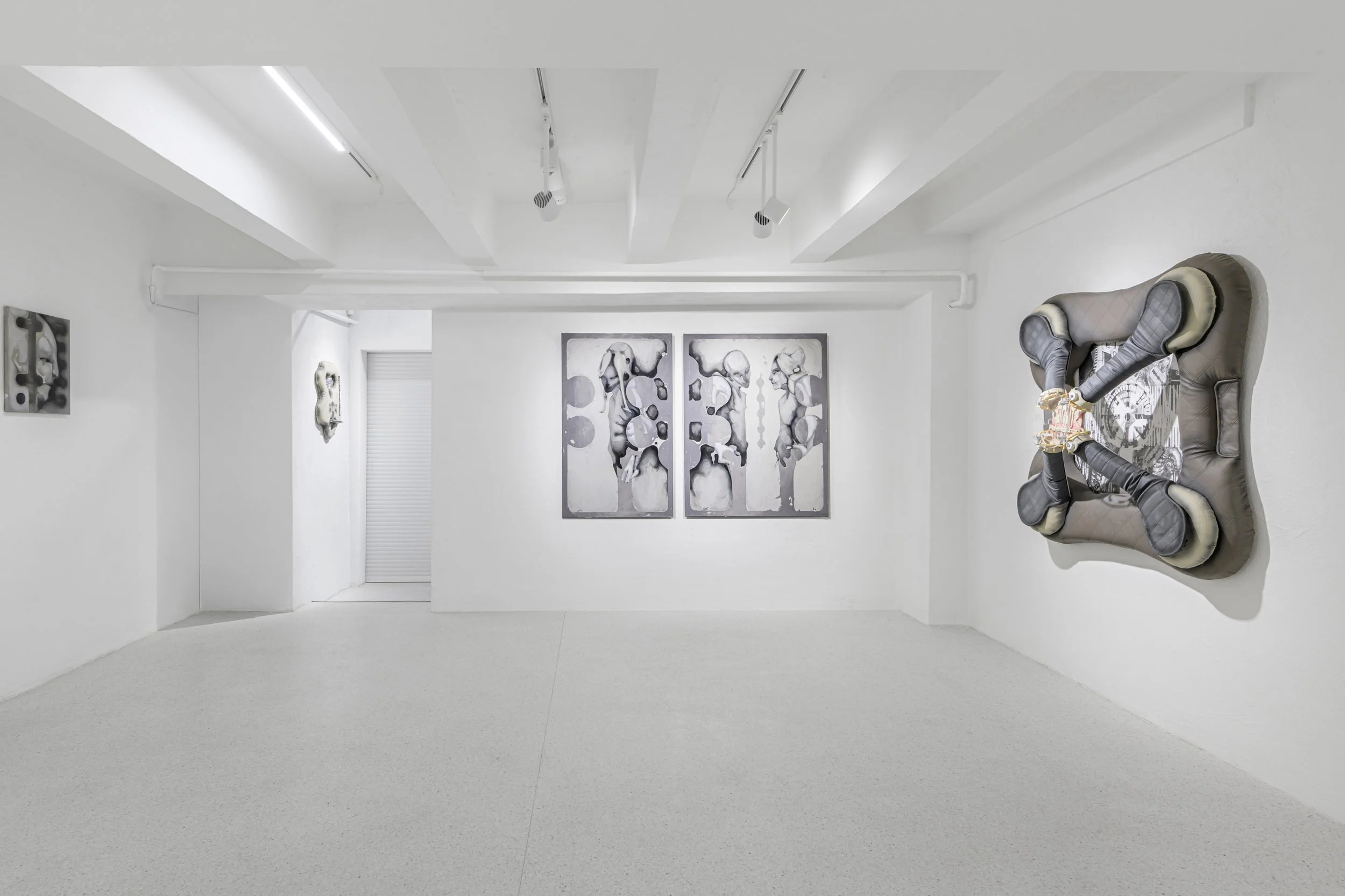
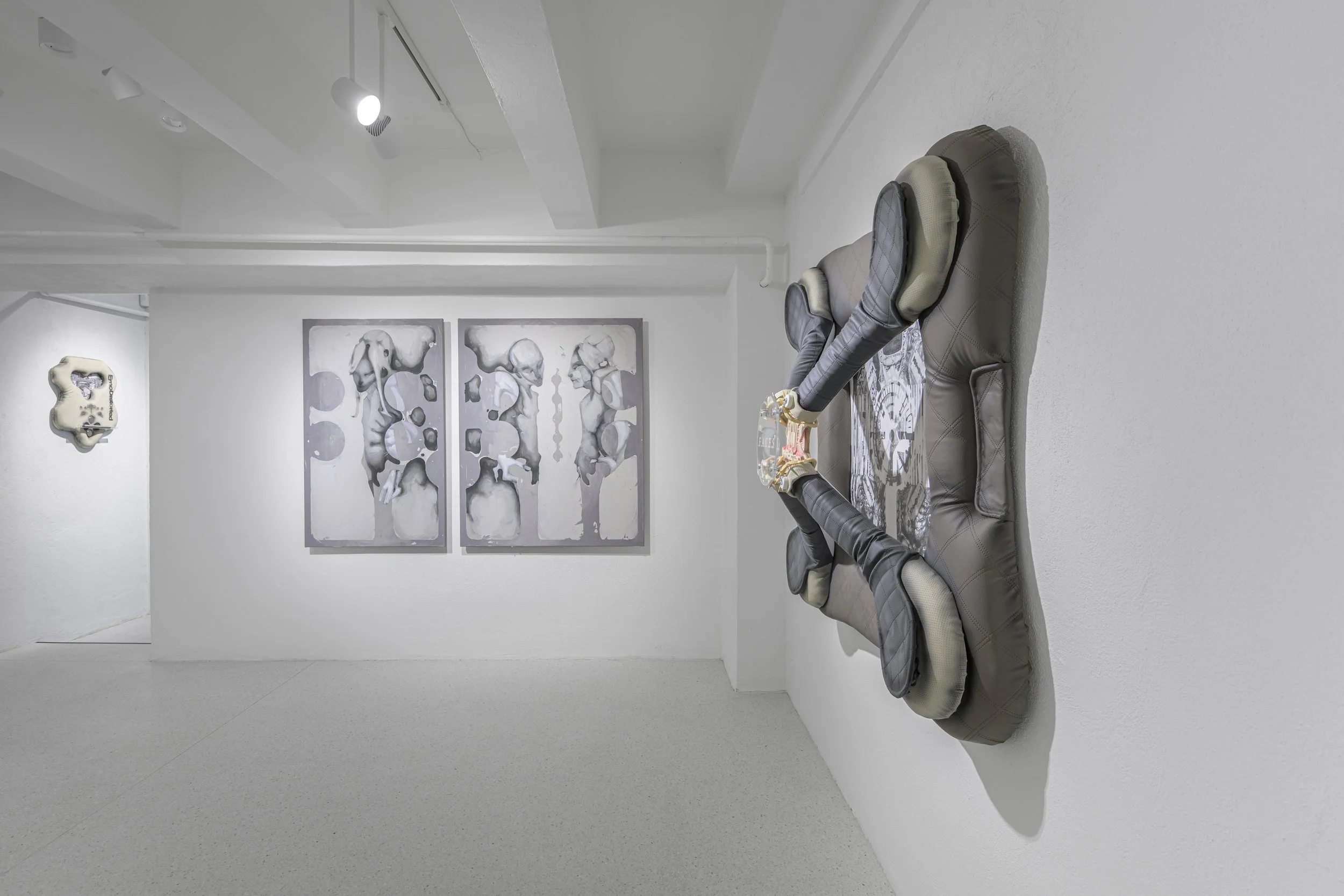
The exhibition Anesthesia Protocols brings together the works of Paula Gogola and Olbram Pavlíček through a shared interest in the body as a space of transformation, projection and negotiation.
The exhibition is part of Gallery Weekend Bratislava.
Paula Gogola, the current laureate of the VÚB Painting of the Year award, approaches the body through intimate, emotional and speculative figuration, while Pavlíček examines its relationship to technological systems and the invisible structures shaping contemporary life.
Their practices meet in an exploration of porous boundaries between the organic and the constructed, attraction and discomfort, care and control. Together, the exhibition presents the body not as a stable entity, but as an evolving site of continuous becoming.
PAULA GOGOLA
(b. 1998, lives and works in Prague) explores the body as a fluid and unstable site shaped by personal experience, cultural narratives and speculative imaginaries. Working through painting and figuration, she examines themes of vulnerability, desire, hormonal transformation and care. Drawing on queer and feminist perspectives, her fragmented figures inhabit spaces between attraction and alienation, intimacy and estrangement. Gogola studied at the Academy of Fine Arts in Prague and the Academy of Fine Arts and Design in Bratislava, and has recently exhibited in Prague, Bratislava, Berlin and Budapest.
Paula Gogola
Untitled, 2026
Mixed media on canvas, stainless steel
185 x 130 cm
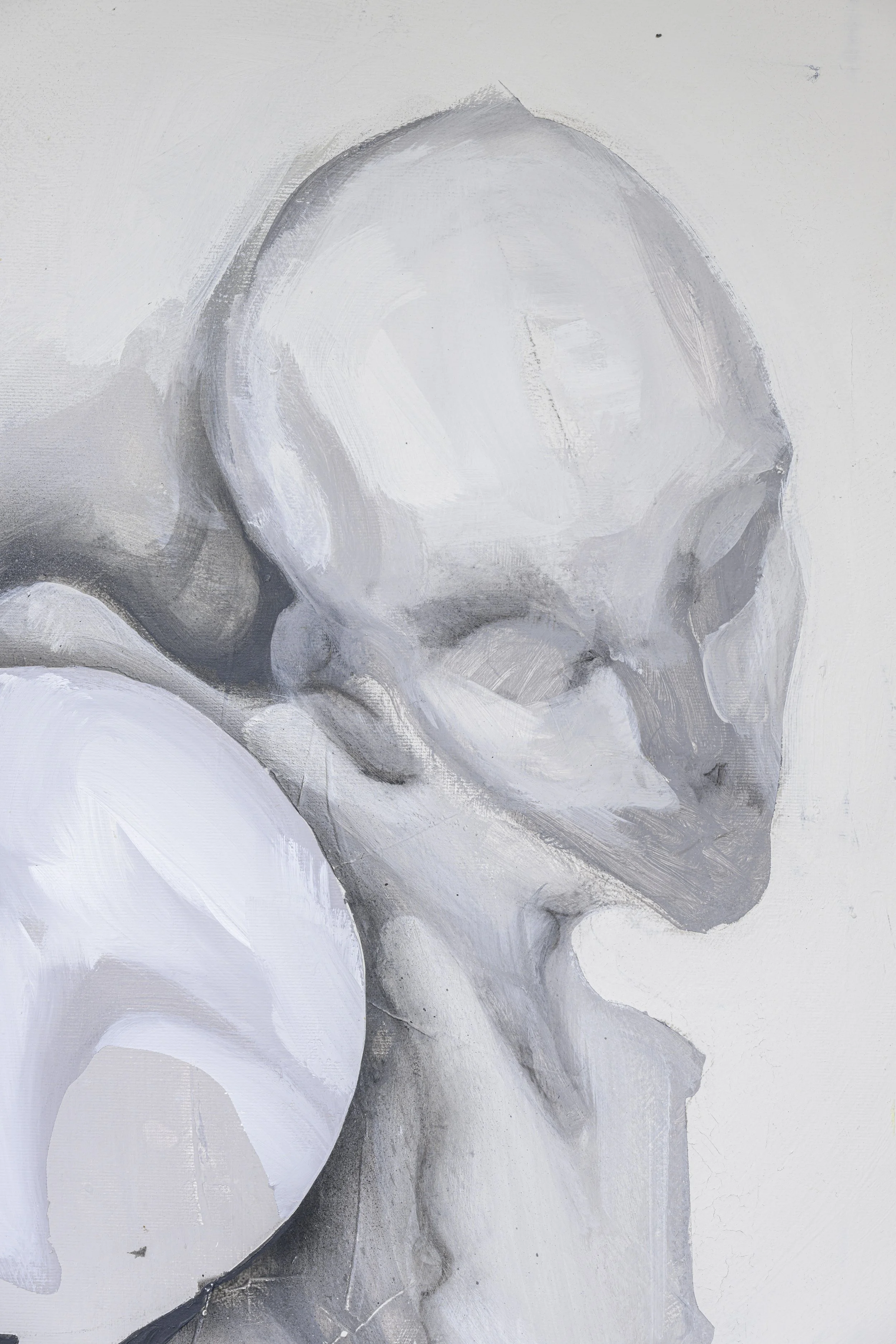
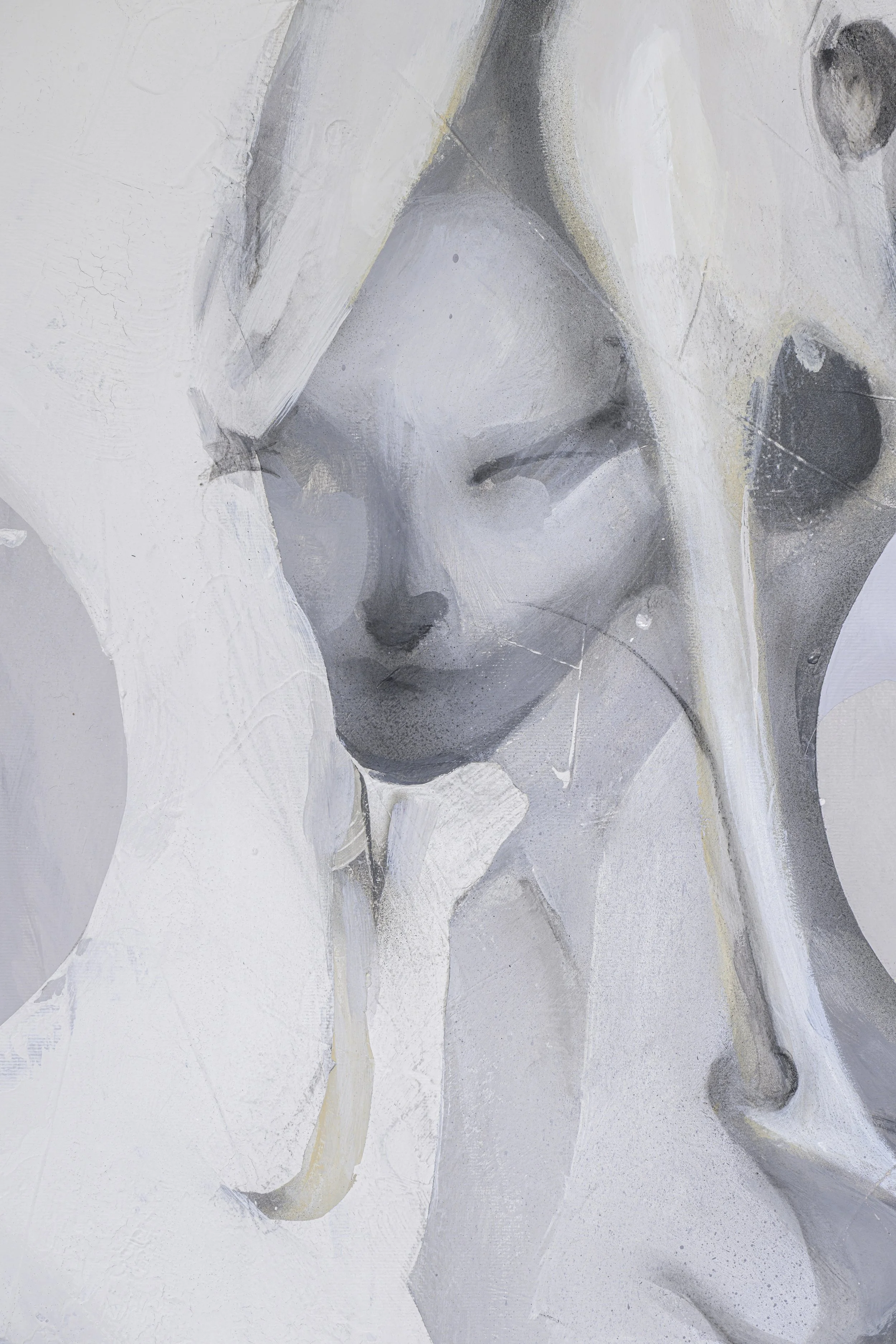
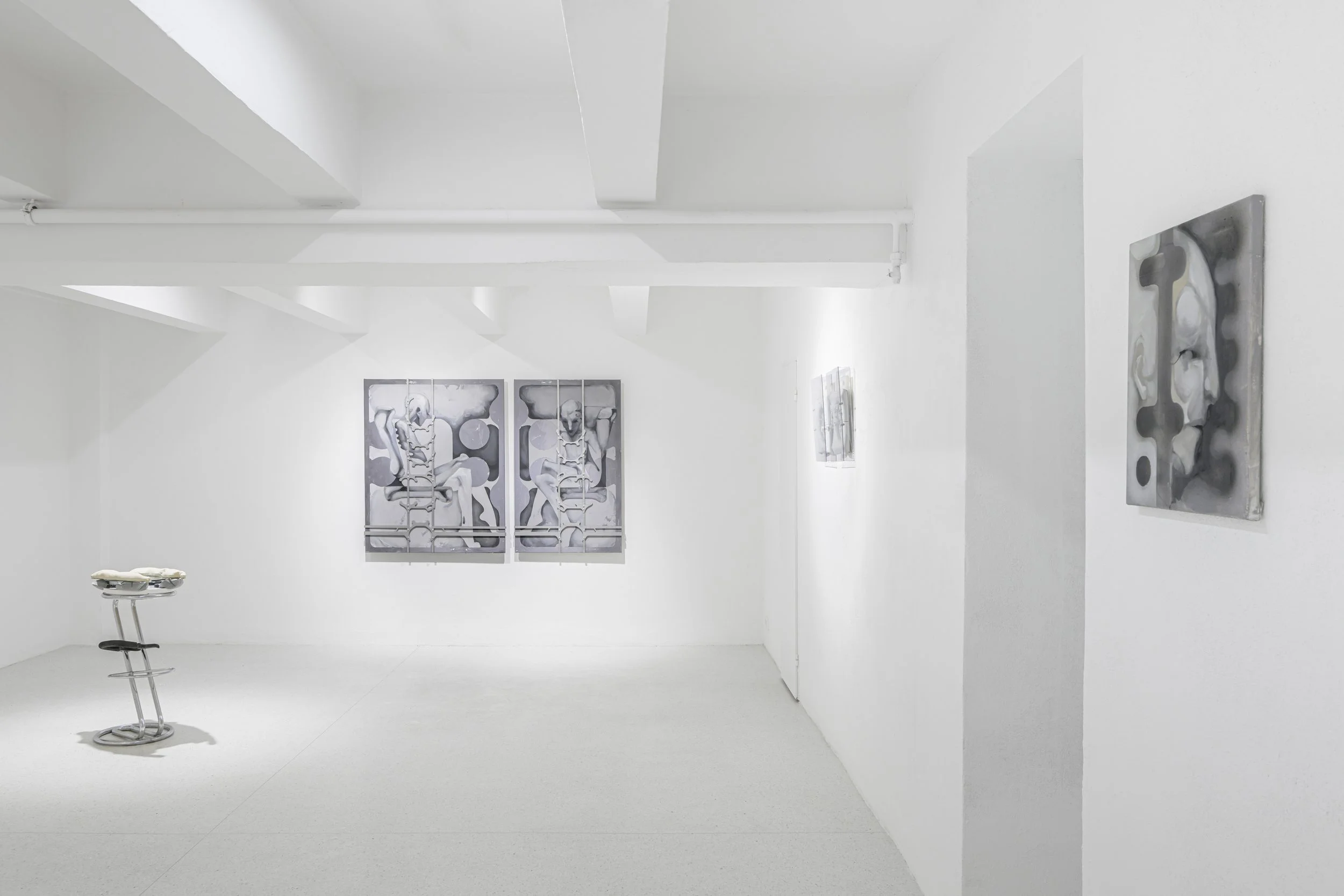
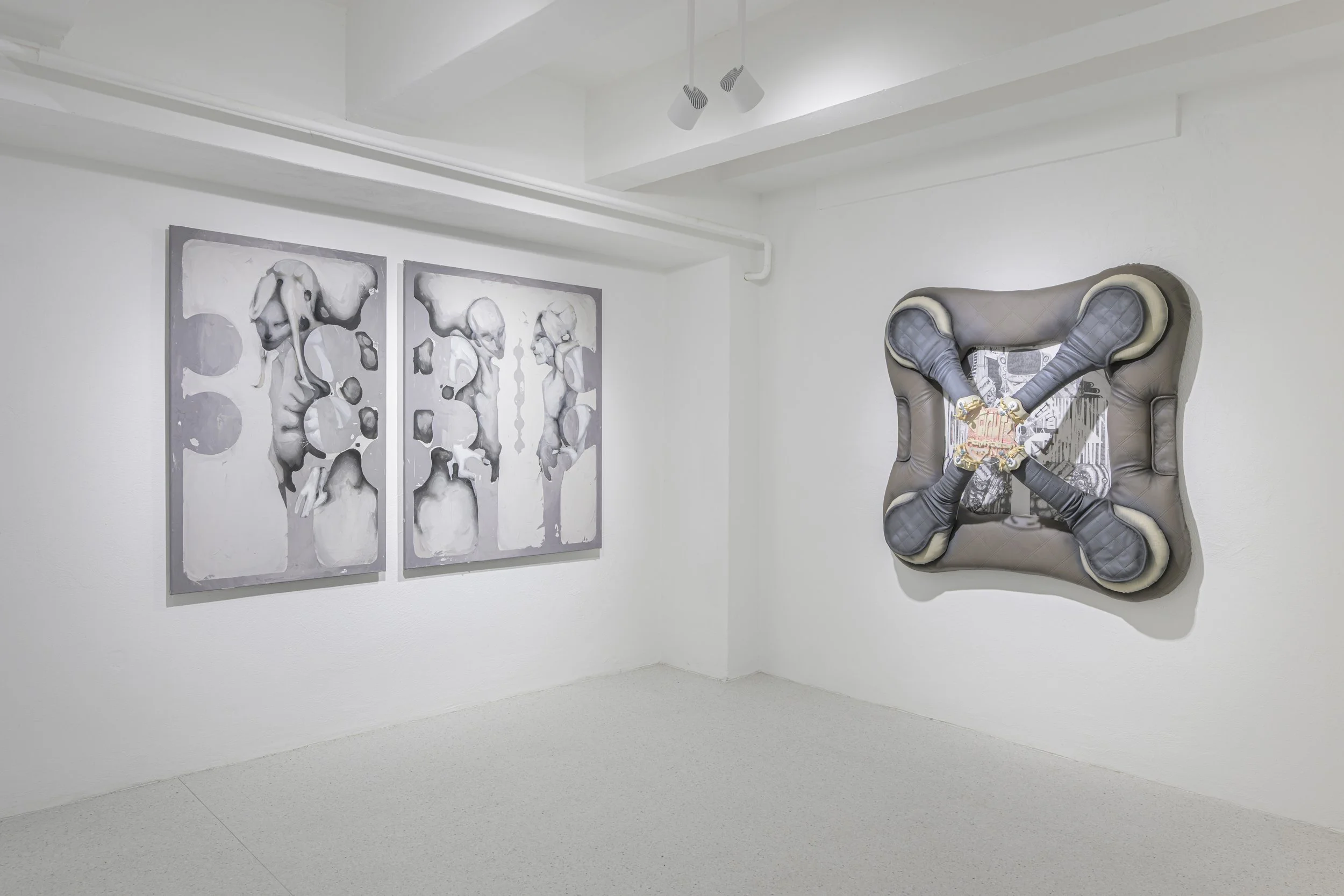
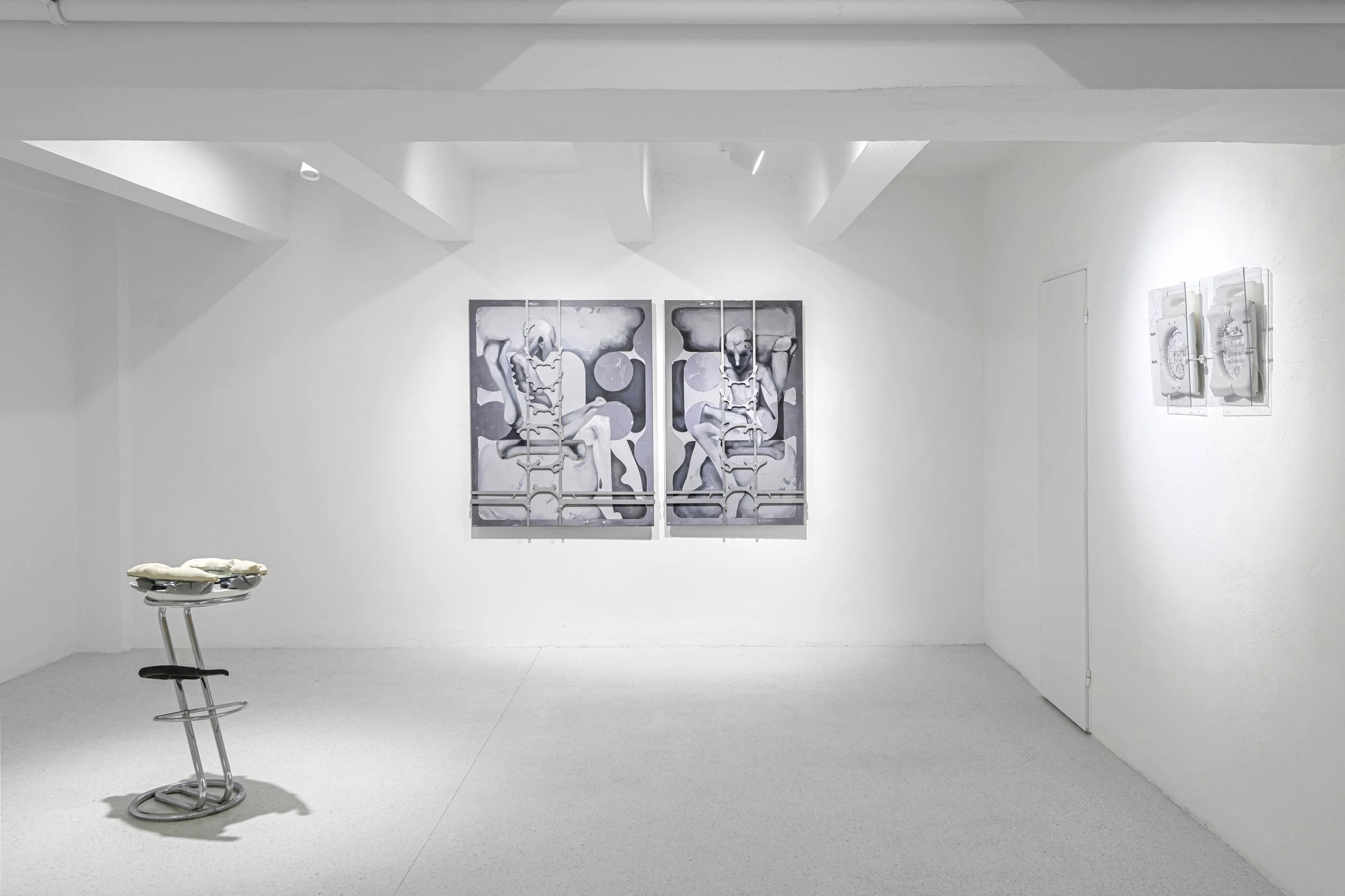
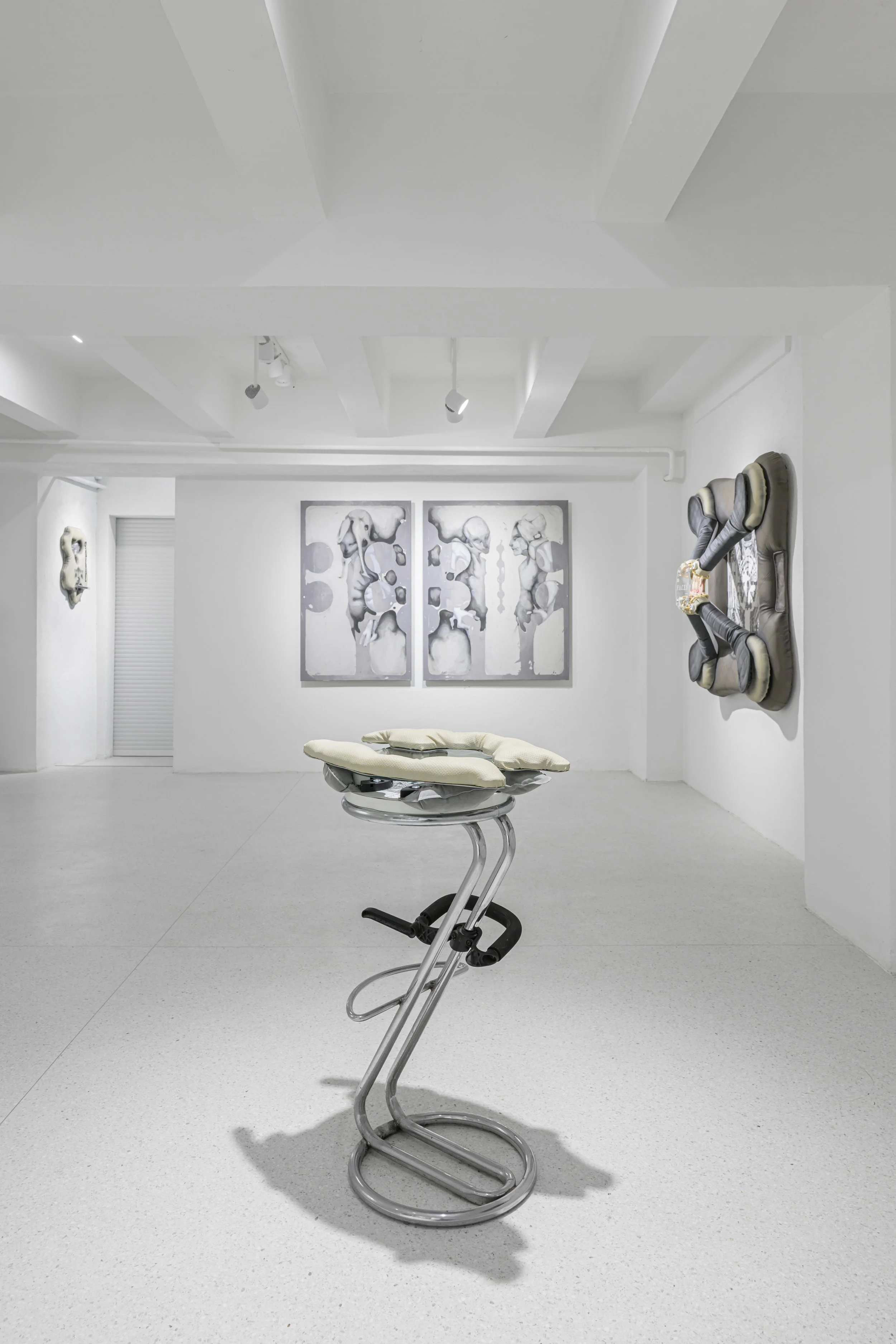
For Anesthesia Protocols, Paula Gogola presents new diptychs. The compositions include erect figures that stand and sit in liminal spaces that are both mundane and cosmic, and the bodies are inclined toward the massive ornamentations in the areas of their spinal cords. It is a prehistoric interface, all monochrome. The assembled wall-hanging objects of Olbram Pavlíček are devices, or mirrors, or cursed pieces of furniture that imprint and envelop body parts. Produced with upholstery, they accommodate bodies while simultaneously stretching them into unnatural poses. These are scenographies of posthuman reproductive labour. Gogola's figurated spines and Pavlíček's small torture-wellness machines, stretching bodily verticalities in eerie and obscure settings, evoke speculative genealogies of spinal catastrophism.
In the theoretical pessimist horror of Spinal Catastrophism, Thomas Moynihan examines the spinal cord as an archaeological media object. The spinal-radial axis grounding the body becomes a culmination of the evolutionary externalisation of organs. Here the spine emerges as a geological archive of planetary trauma, a chronological artefact shaped through adaptation to the deep time of evolution. The erect figure belongs to the state. The Kantian self proudly straightens itself up in order to govern and be governed. Unlike uprightness, the body that exceeds power is always inclined; it is always in relation. In this way, Gogola's figures incline toward each other, toward the environment, and toward the frame. Pavlíček's obscure objects trace bodily imprints onto soft and abrasive surfaces. They share the complexity of the temporal and the inhuman. Inclination stands for scoliosis, for diagrams melting under a heavy sun, for liminal spaces, and for sickness.
Paula Gogola
Untitled, 2026
mixed media on canvas, stainless steel
185 x 130 cm
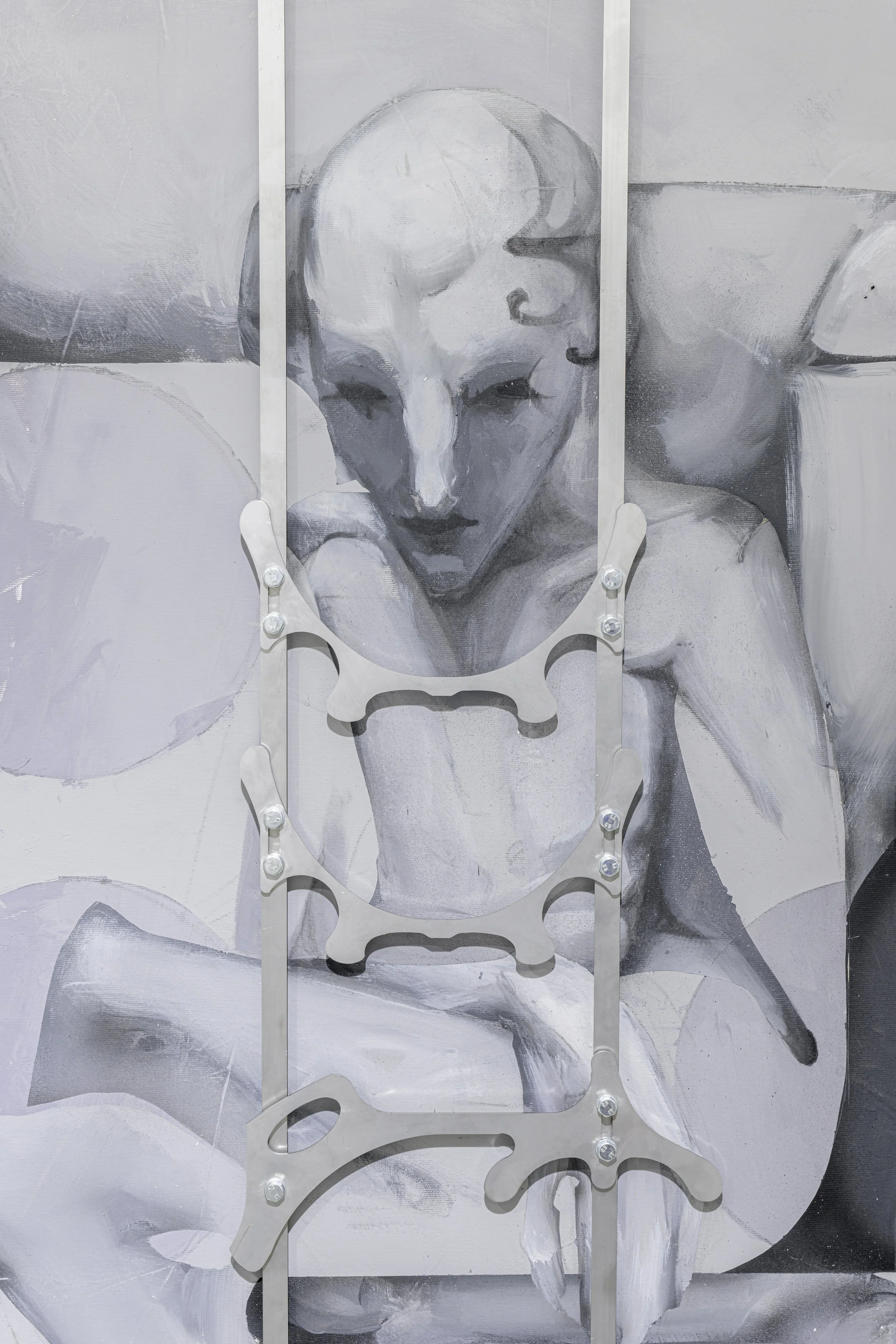
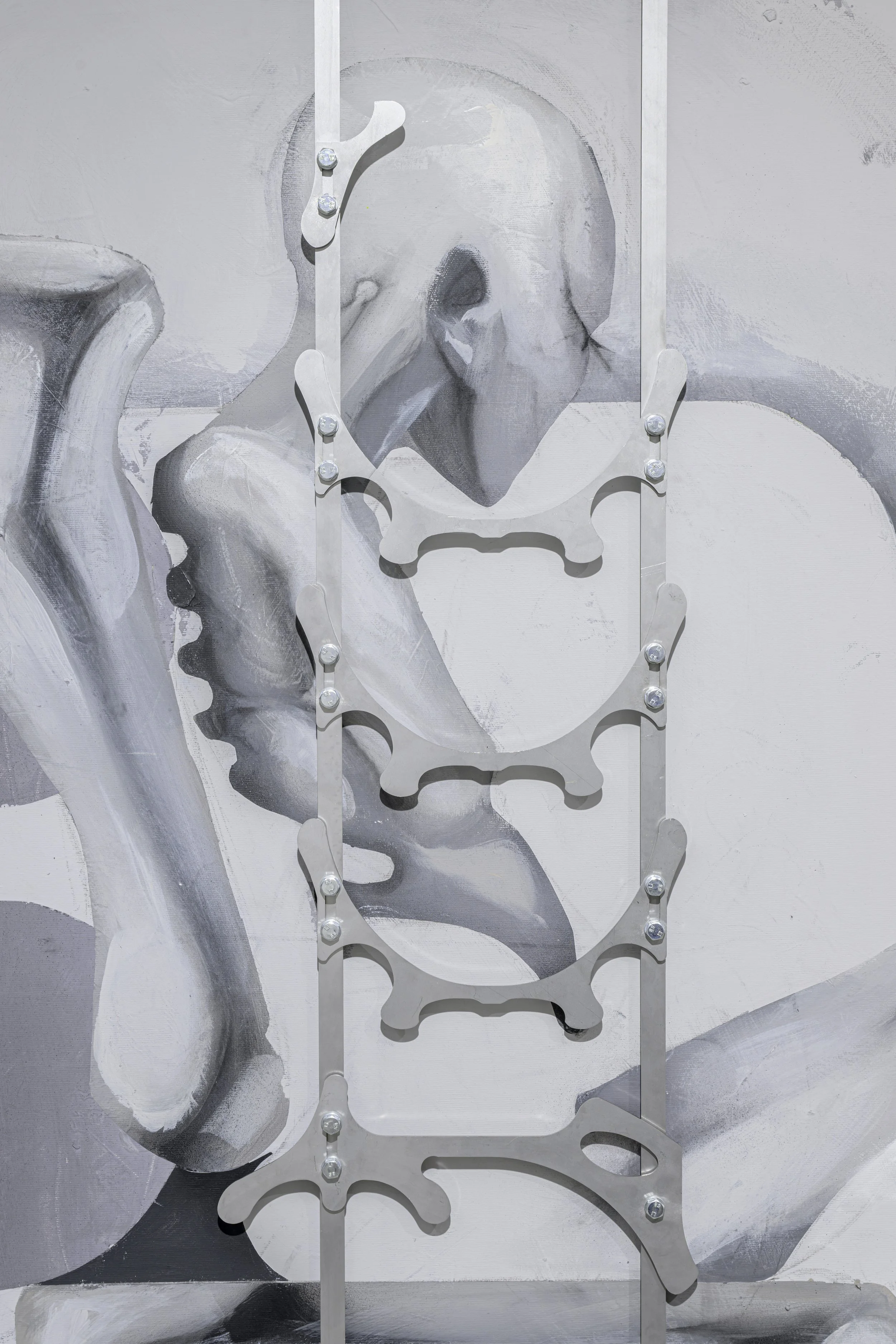
The figuration of uprightness obscures other bodily topographies: queer, spineless, and powerless. Here one can think with Eva Hayward's imagination of what trans body and prefixial flesh are: always dynamic and incomplete. Drawing on Antony and the Johnsons' song Cripple and the Starfish and on the biomorphology of marine invertebrates capable of regenerating lost limbs and becoming a new body, Hayward proposes a model of bodily becoming. Transsexuals and starfish challenge disembodied metaphors such as resemblance or simile, suggesting instead that we are metonymically stitched to carnal substrates. She reframes bodily cutting – also in the surgical and hormonal cut of gender transition – not as destruction or loss, but as an opportunity for transformation and regeneration. She speaks about the cut, not in defamatory terms but as a way to produce conditions for regrowth. The cut is possibility. The cut is also pain.
Going through her medicalisation experience with breast cancer Anne Boyer speaks of pain: it is not that pain cannot say words, that pain resists articulation, it is non-expressive, not property and not metaphysics. A battleground turned into a 7-Eleven on which someone has graffited Pain without Victory. Anaesthesia here is a lubricant for the capitalist stratum being accommodated to the body. The title of the exhibition offers one way of reading the resonatingreading resonating works of Gogola and Pavlíček. It refers to strange states between life and death, pain and dissociation. If dissociation can be the name of a process that slows down or even freezes the imaging processes of metaphor and that precede this valorization, it is no surprise that it pops up in proximity to this emotional overload.
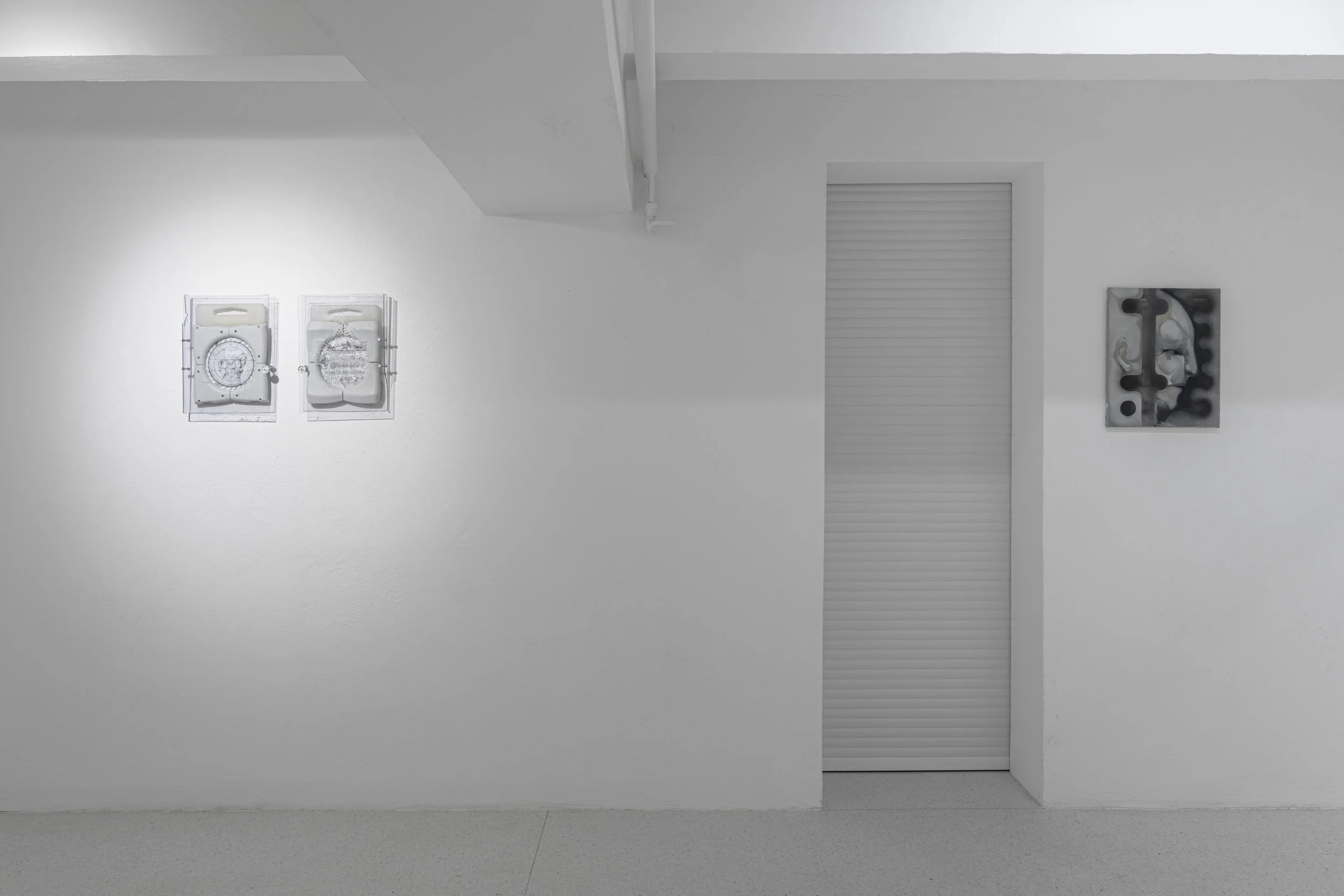
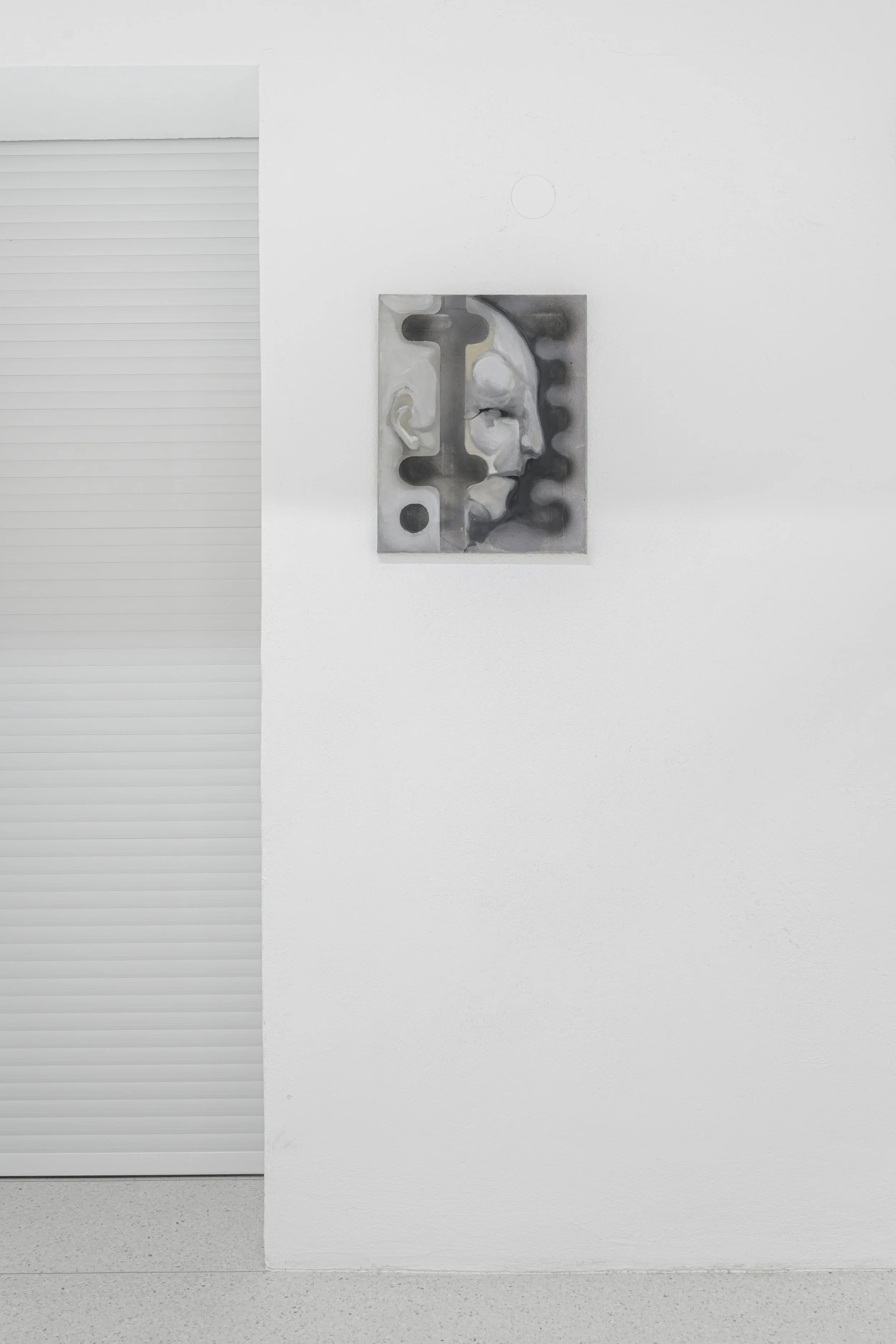
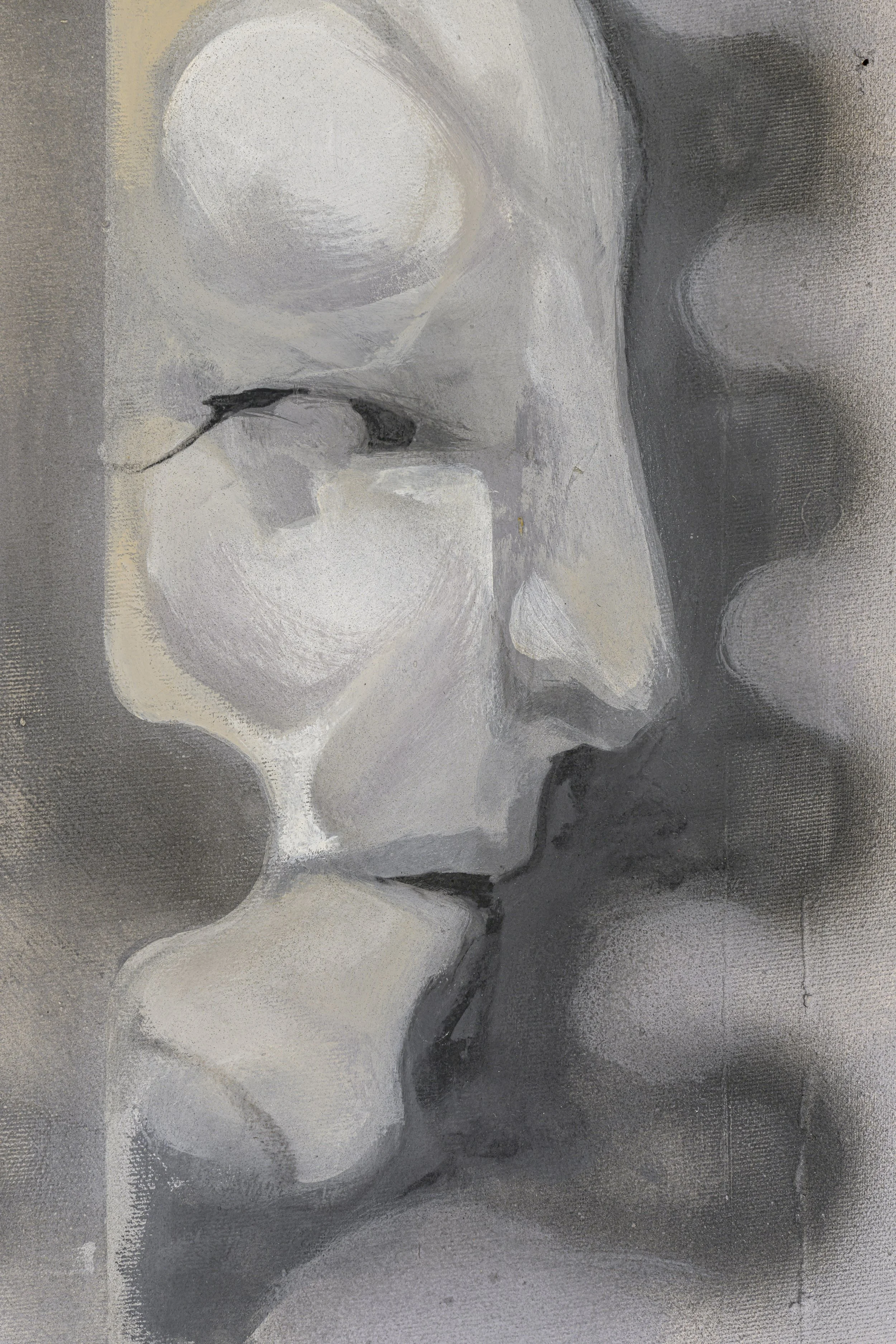
Paula Gogola
Untitled, 2026
mixed media on canvas, stainless steel
50 × 40 cm
Anaesthesia operates in at least two ways: first, as the numbing of pain through surgical insensibility; second, in a metaphorical sense, as numbness toward the outside world and externality itself. Modern medicine with its mechanistic concept of the body followed by what Brent Dean Robbins defined as terror management theory, has proliferated the defensive mechanisms against death anxiety, alienation as well as anesthetic consciousness. At the same time, anaesthesia can function as a tool of bodily displacement and sensory dissociation, allowing subjects to exist temporarily outside the constraints of binary or "complete" bodies. It can also help navigating the shattering and clouding that dissociative language describes as a real layer of life. In this way the exhibition refers to sharp objects and numbness, to damaging and modifying, to cuts and surfaces.
While Gogola's painterly and sculptural practice reflects prefixial flesh, the body in becoming, through transfiguration which refuses articulated narrative and representation, there is also a double framing at work. The first emerges from the painterly plane itself, where bodies and environments are framed by ornamentation and a fading dark border. The second consists of sleek metal frames that hold the space of the paintings while simultaneously extending beyond it. These metallic interventions create shiny cuts across the compositions. They are, in a sense, inverse frames. The paintings distribute attention between figures and backgrounds with equal focus, creating monumental spaces not through representation but through ambience. Her works show an intense lack of intensity.
OLBRAM PAVLÍČEK
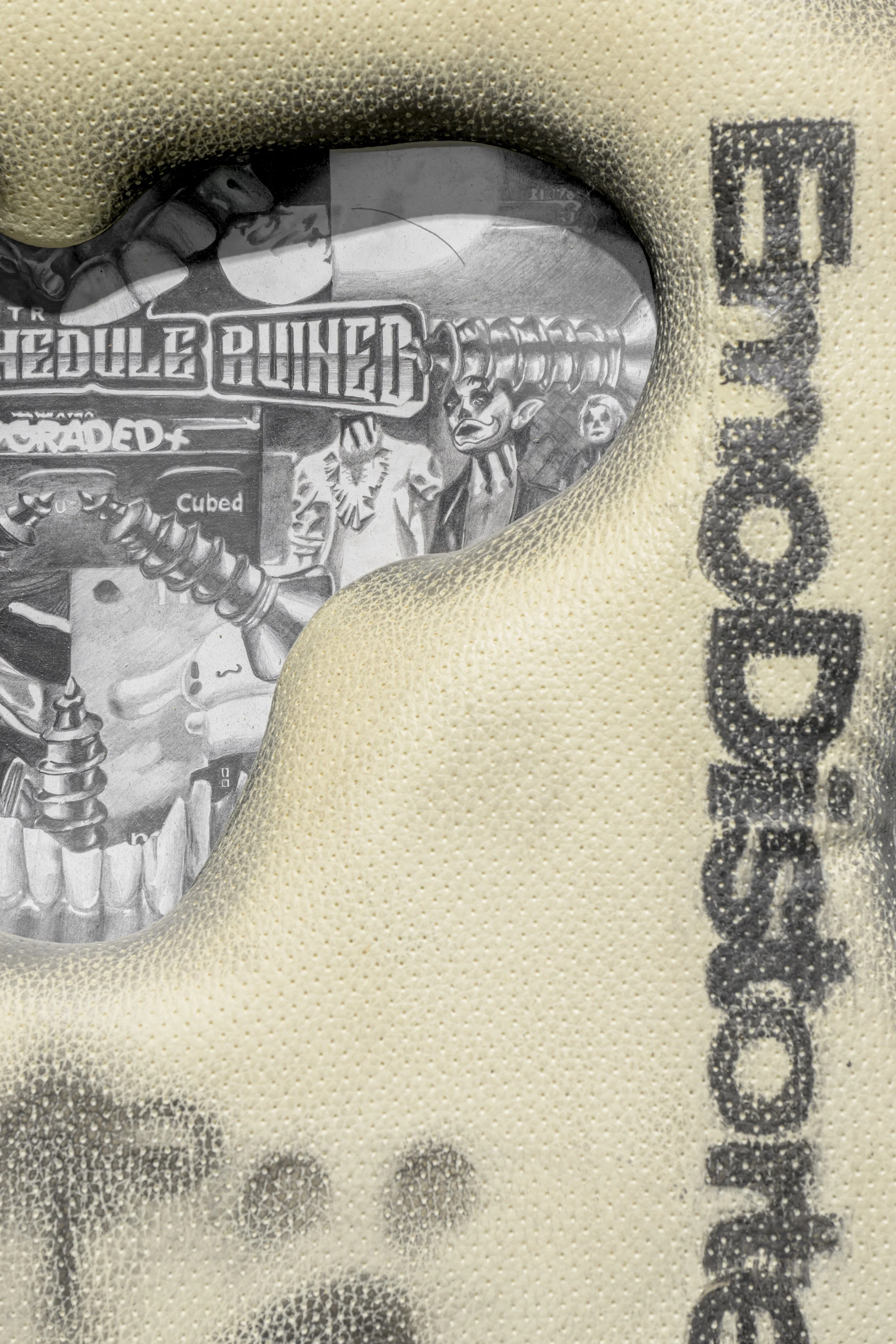
(b. 1993) is a Czech artist, graphic designer and musician whose practice investigates the ways technological and consumer systems shape the human body and perception. Through sculpture and drawing, he examines the tension between comfort and threat, desire and control, often appropriating the visual language of industrial design and digital culture. His works reflect on the body as an open and mutable structure continually reshaped by contemporary bio-technological environments.
Olbram Pavlíček
unhuman POV, 2026
Interieur sculpture, Drawing on paper, Combined Technique
135 x 135 cm
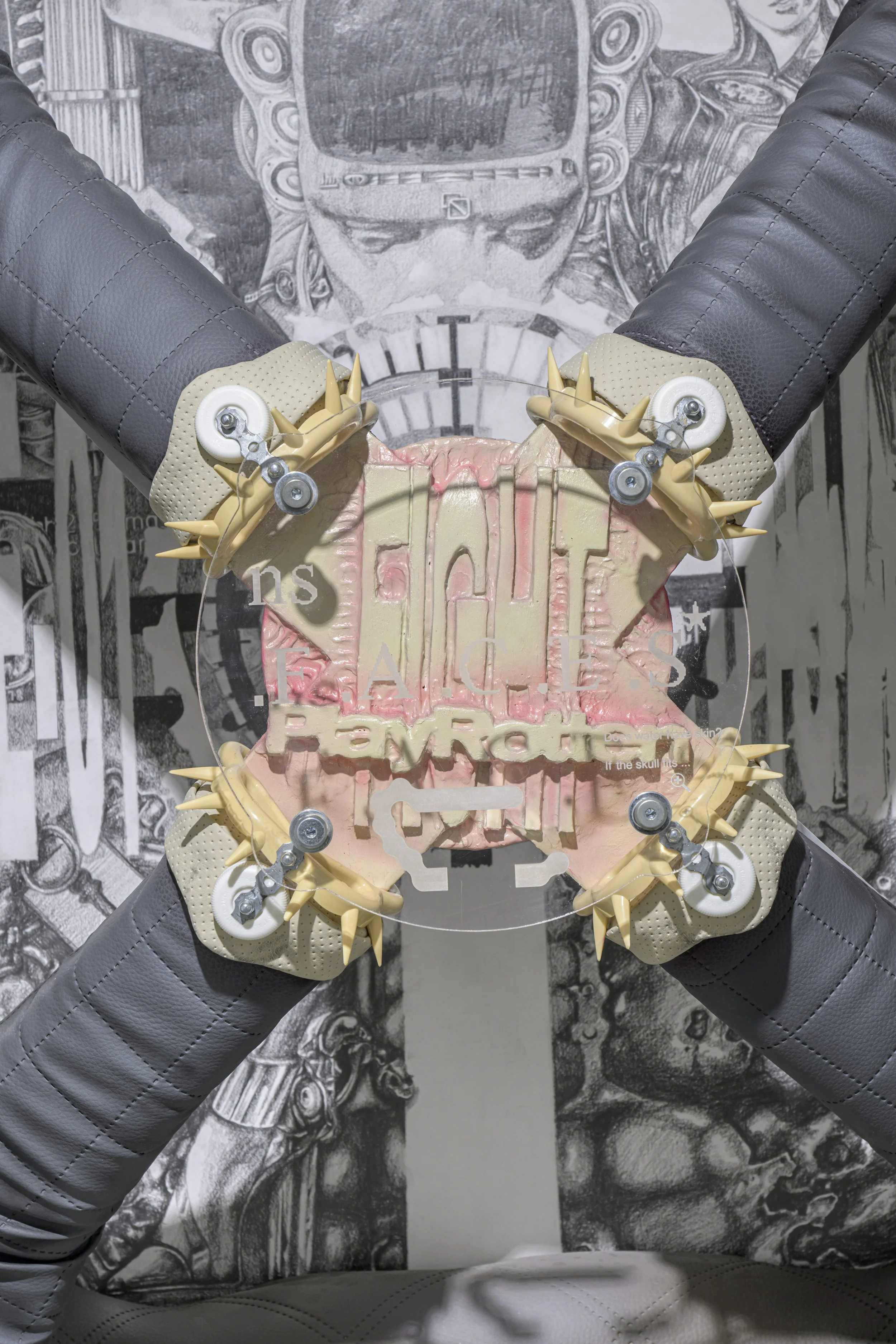
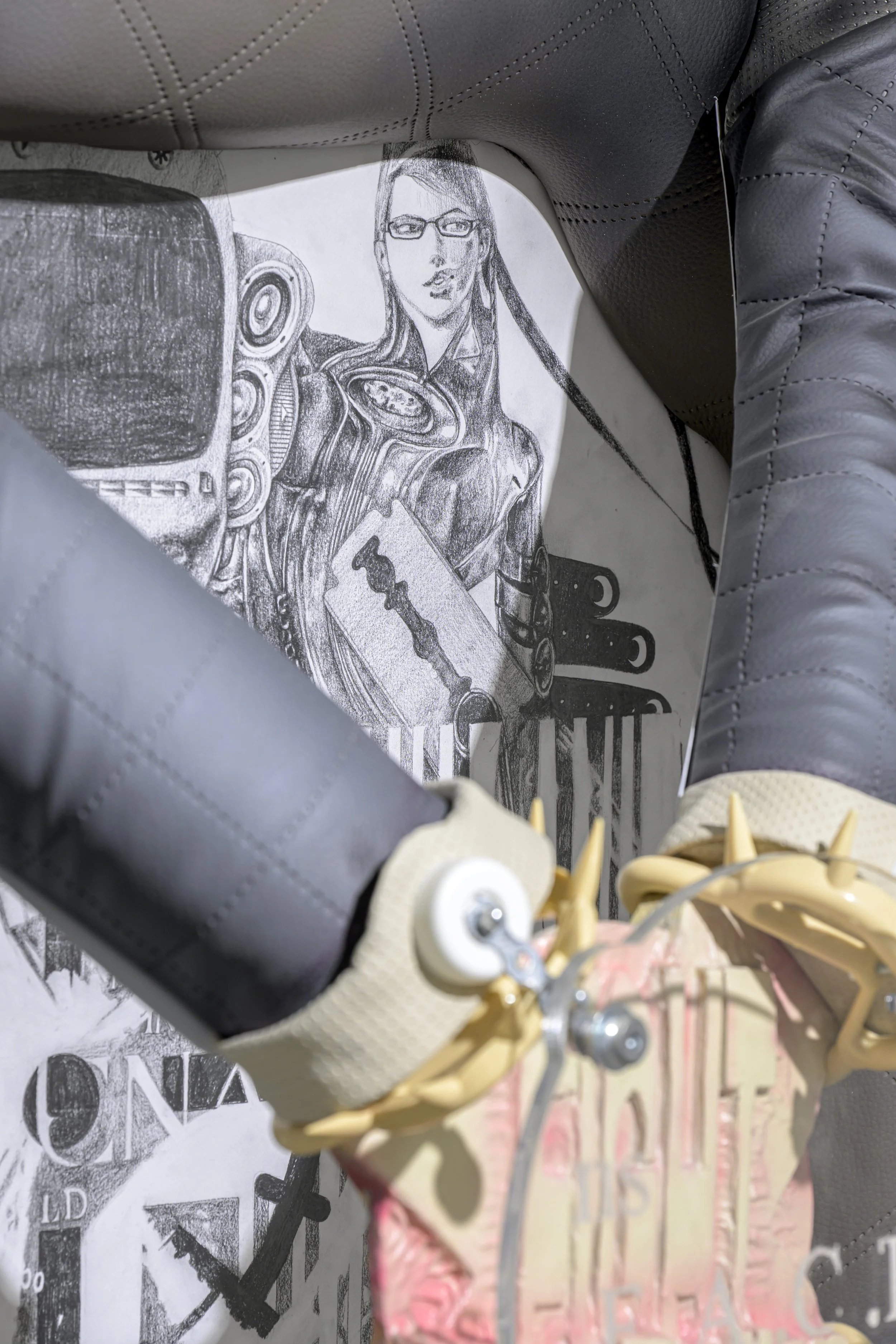
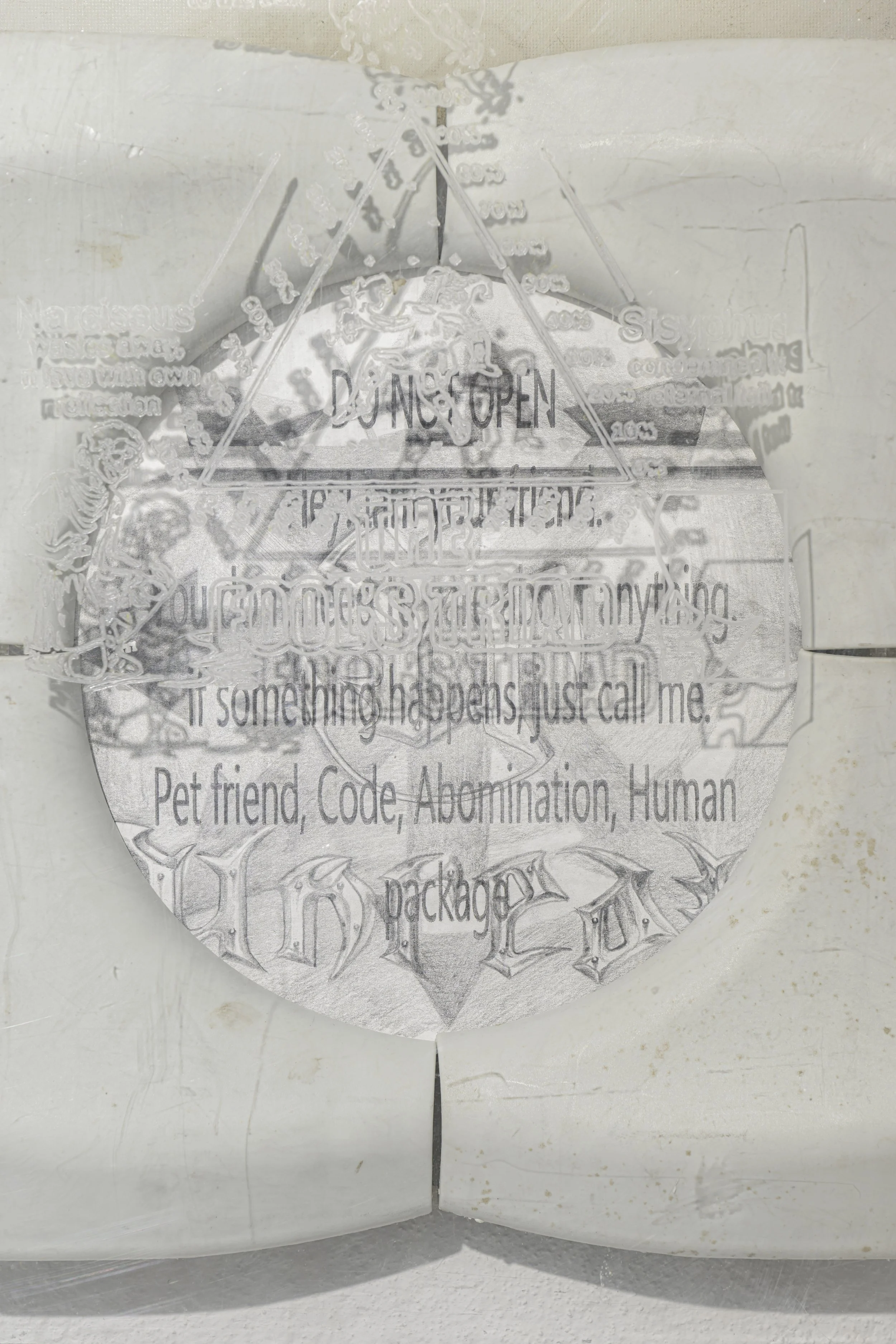
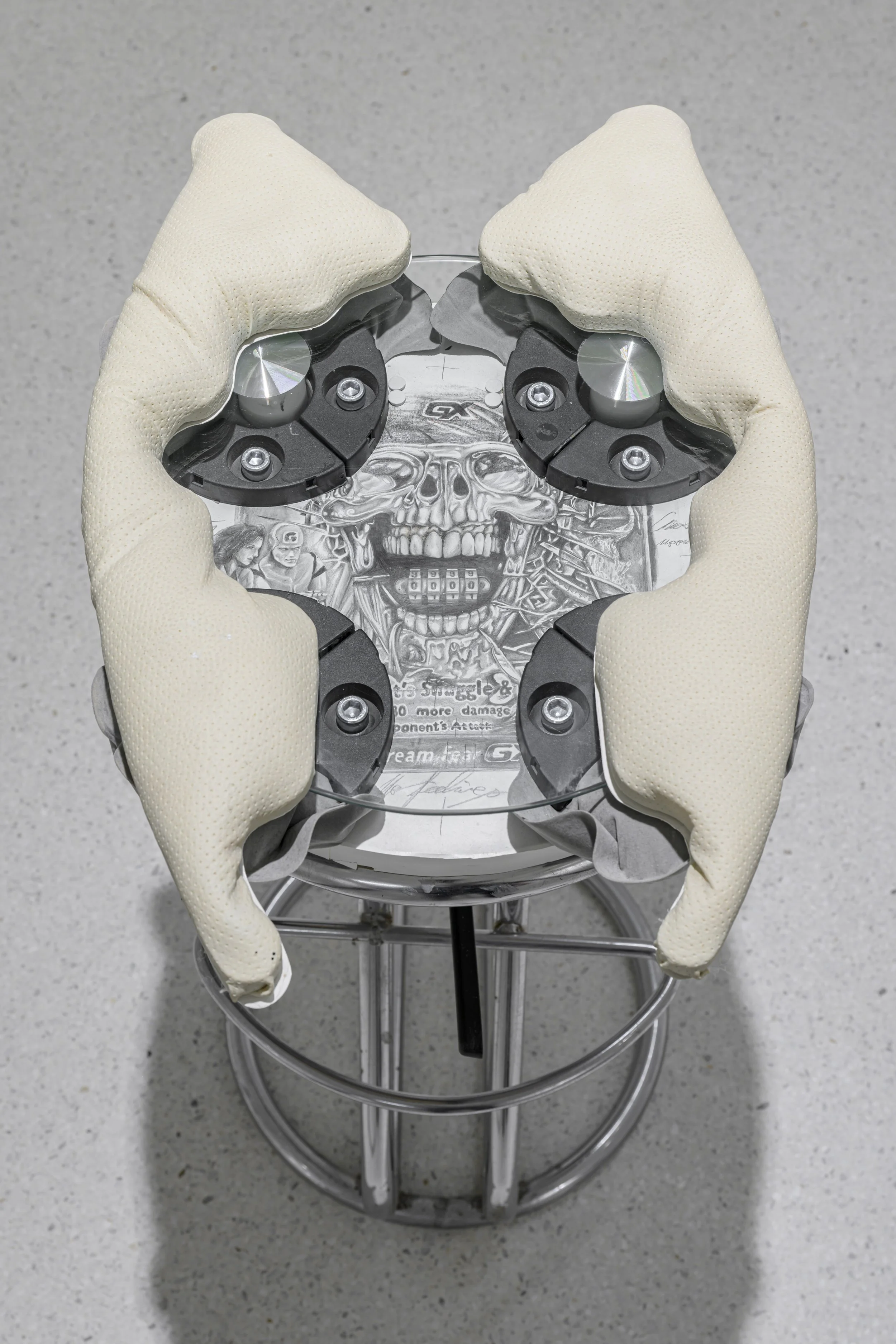
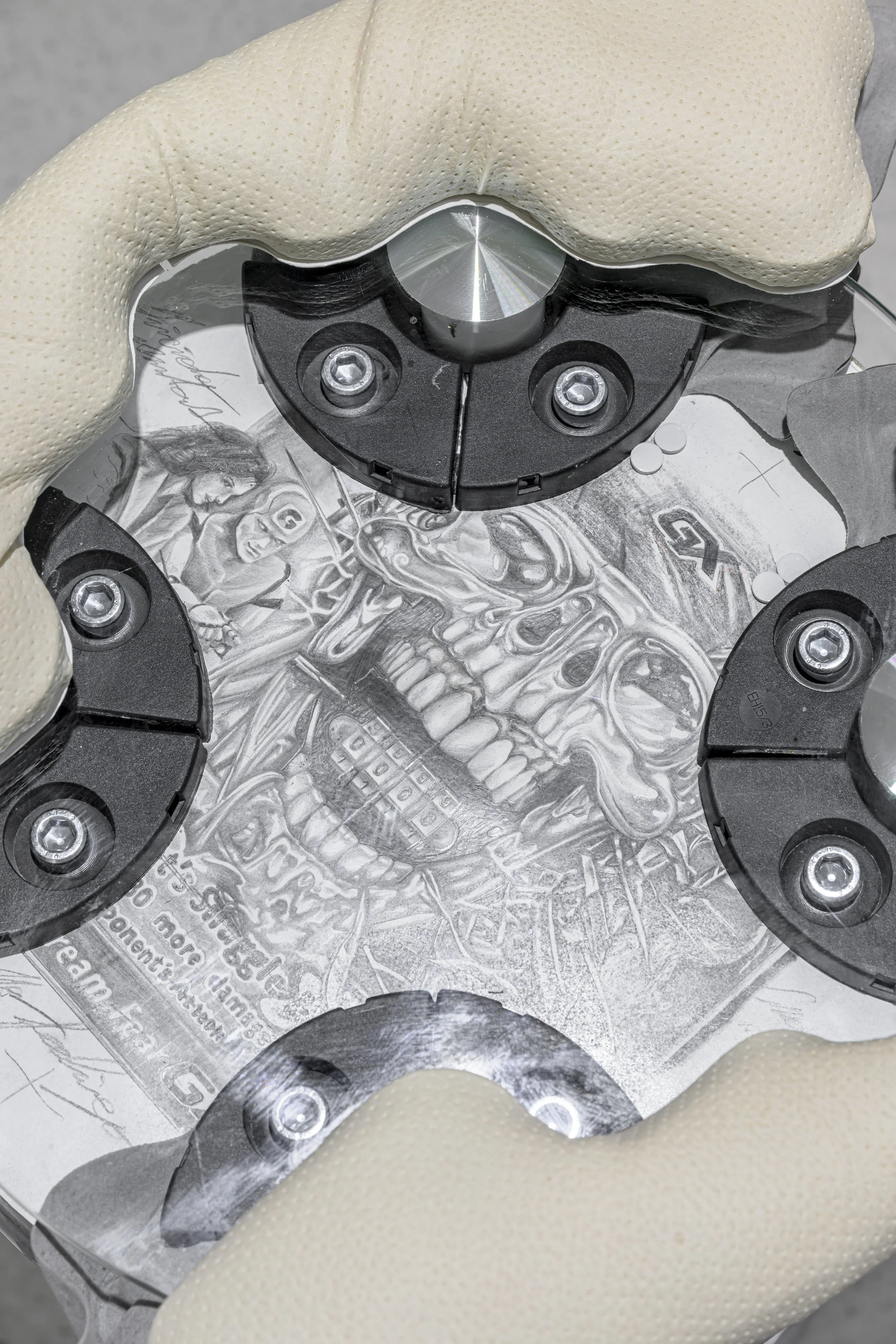
Pavlíček's artefacts of late-capitalist archaeology inhabit neural and dopaminergic terrains of maintenance and coercion. Working with the malign velocities of technology, attention, and prosthetics, he investigates stories of bodily modification, medications, virtuality and anesthetics. They are messy, they have all the references all at once – images of PCs, hypercapitalist desires and exhausted advertisements. He combines textures and forms of found objects with pencil drawings, assembling structures that hold, protect, and remain obscure: their materials range from cutting boards to wellness and children's furniture to calf septum.
Round shapes recur throughout the works: Gogola’s abstract round ornamentations that look like pills or constellations, Pavlíček's diagrams, circular saws and clockwork mechanisms. Temporality moves; time cuts, and it cuts with razor blades. As the body becomes muted and numb, the works themselves seem to lower their volume after an end-of-the-world excess.
Olbram Pavlíček
pretty anxious friend 1, 2026
Interieur sculpture, Drawing on paper, Combined Technique
30 x 25 cm each
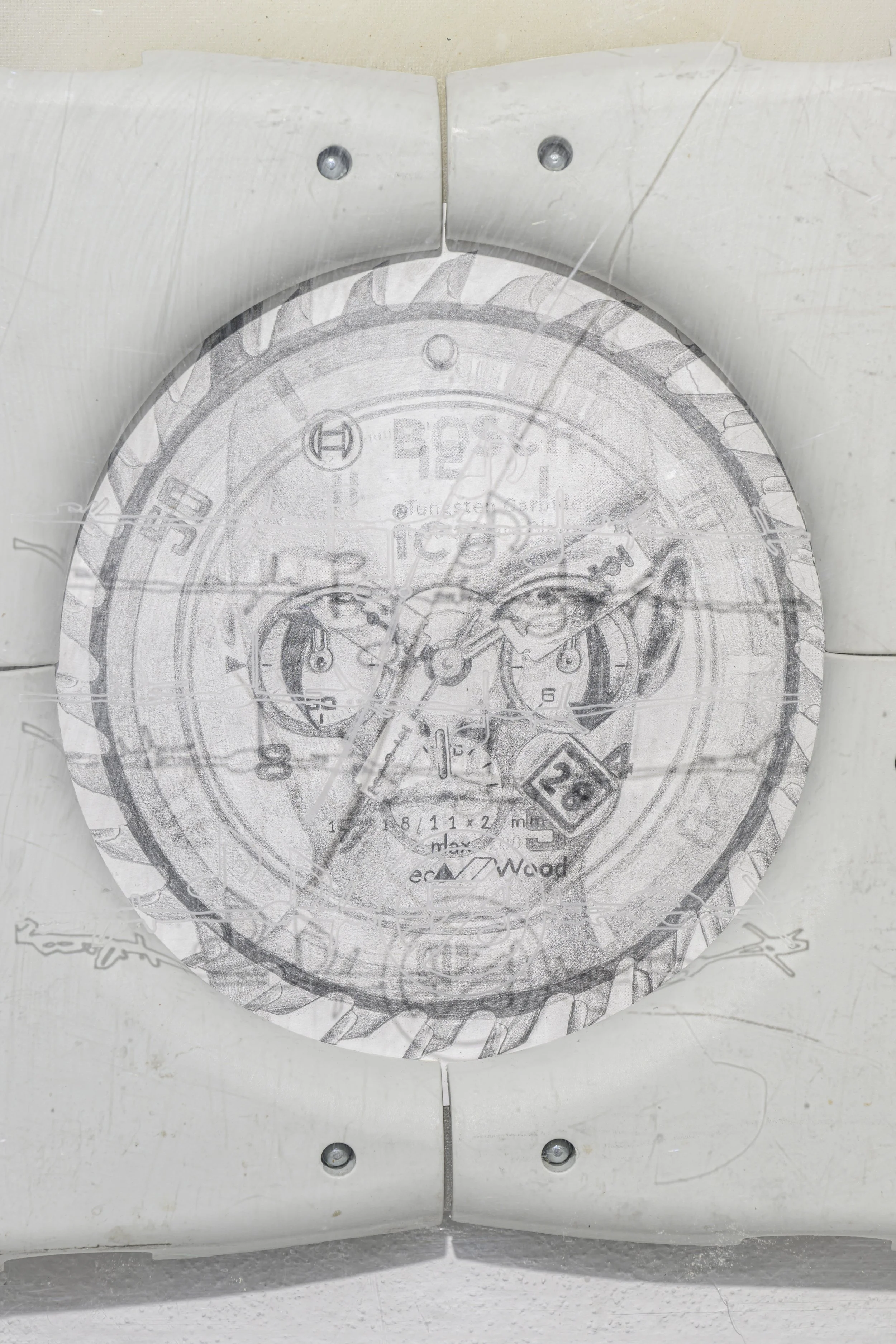
Olbram Pavlíček
poetic CRASHTEST, 2025
Interieur sculpture, Drawing on paper, Combined Technique
35 x 35 cm
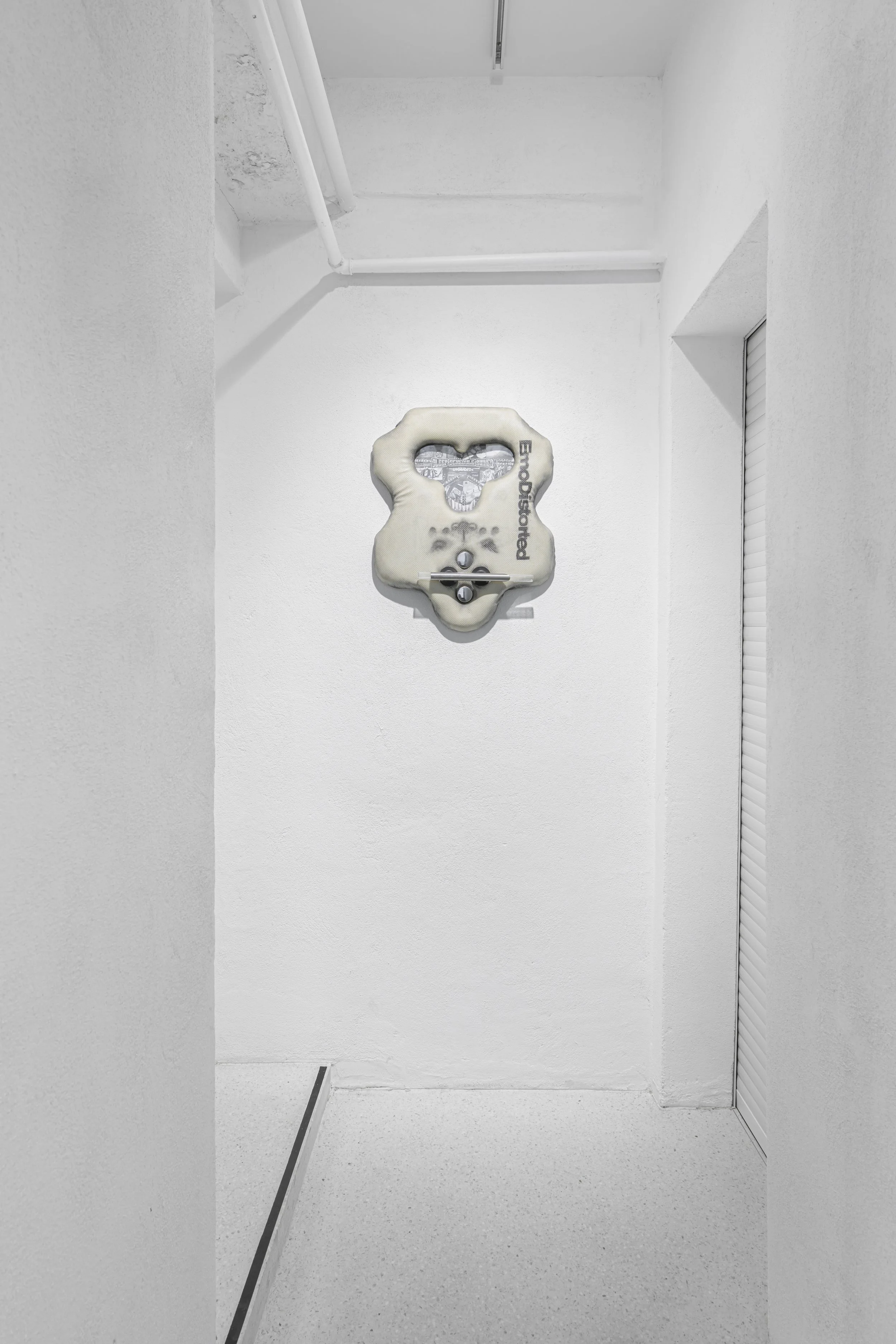
Olbram Pavlíček
KORPSEPUNX@SKINEMODISTORTED, 2023
Interieur sculpture, Drawing on paper, Combined Technique
60 x 50 cm