To Cross Arms While Holding Hands
April 29 — May 30, 2026
Maria Bartuszová
Klára Hosnedlová
Zsófia Keresztes
Réka Lőrincz
Ljuba Šlechtová
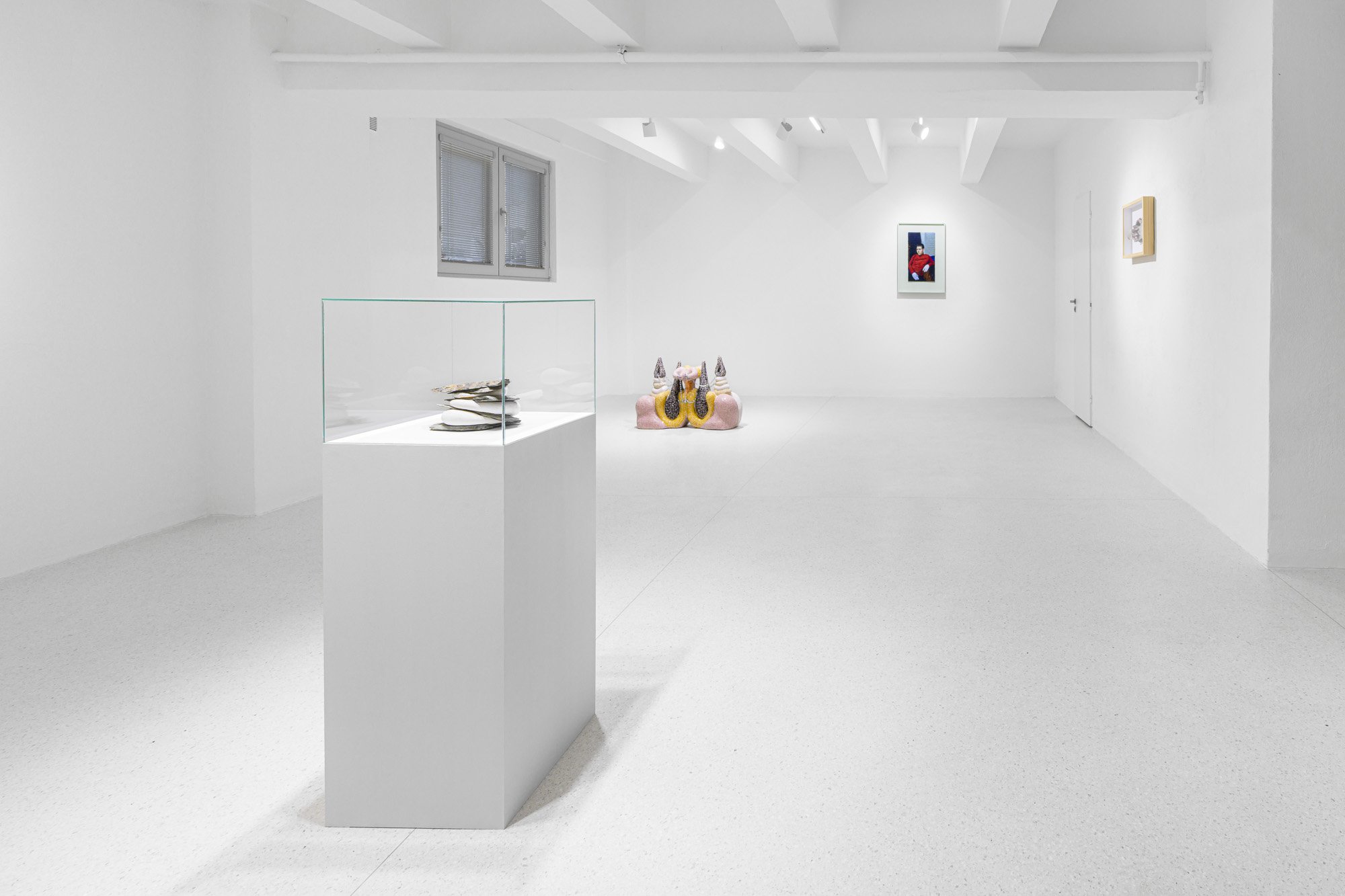
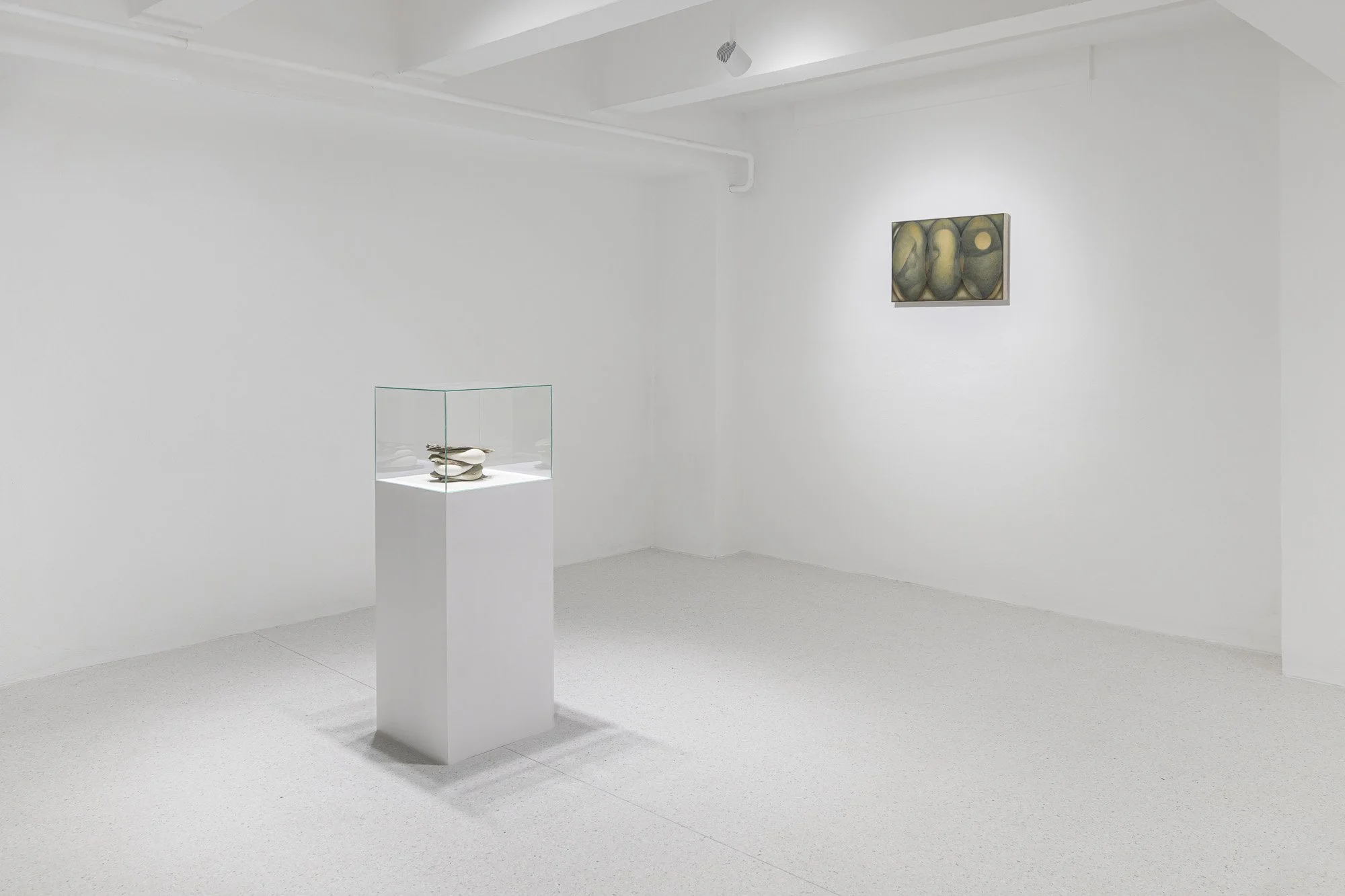
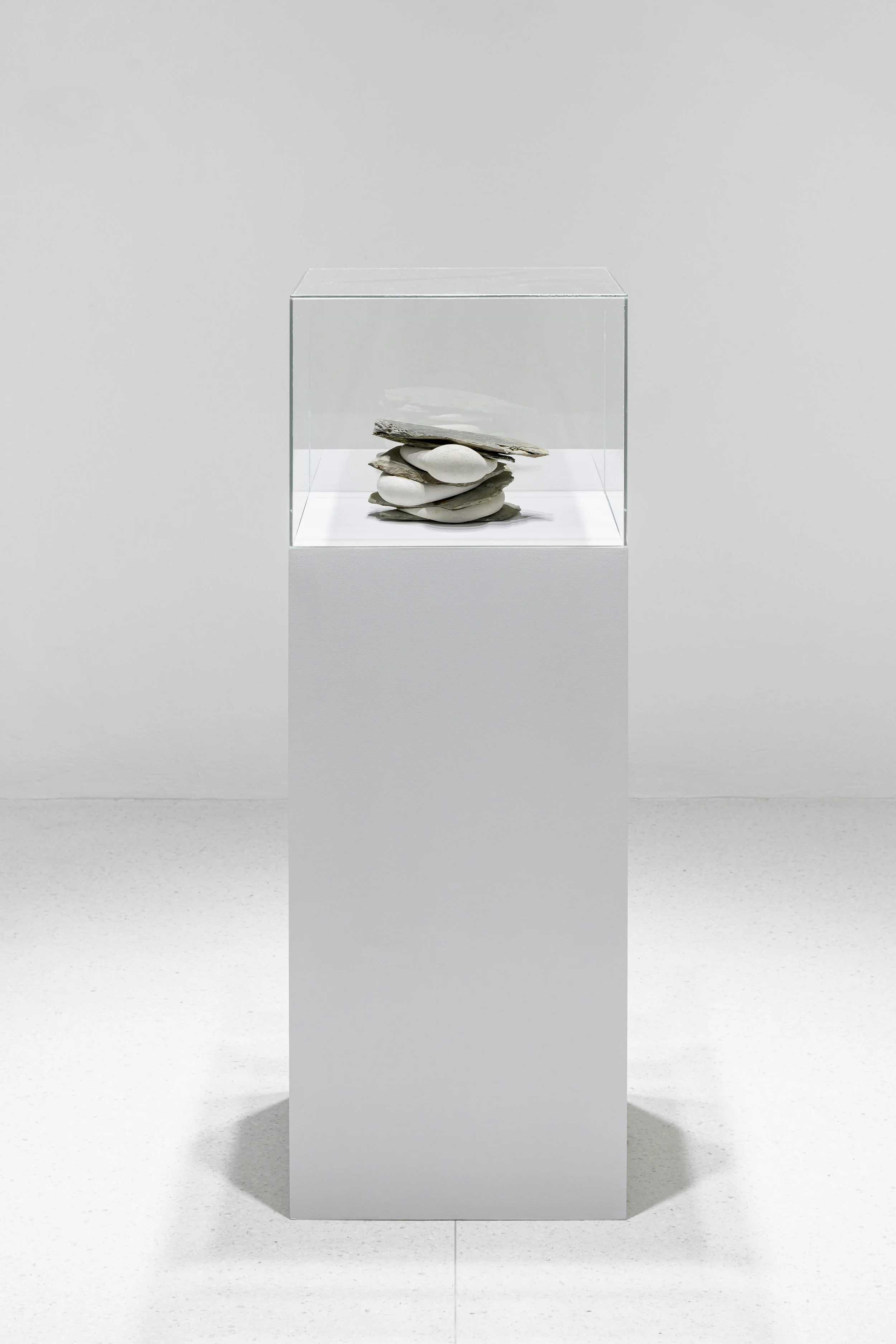
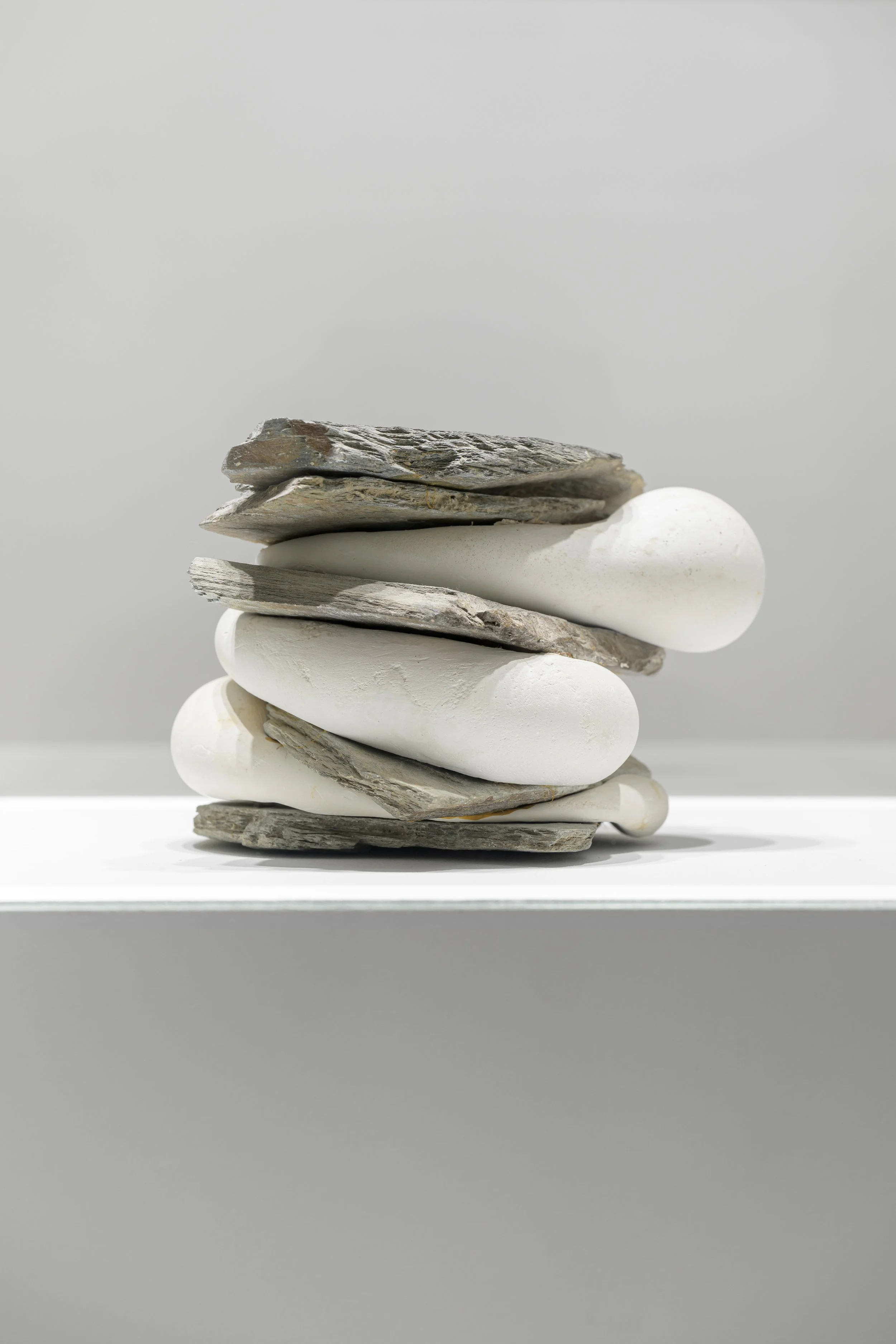
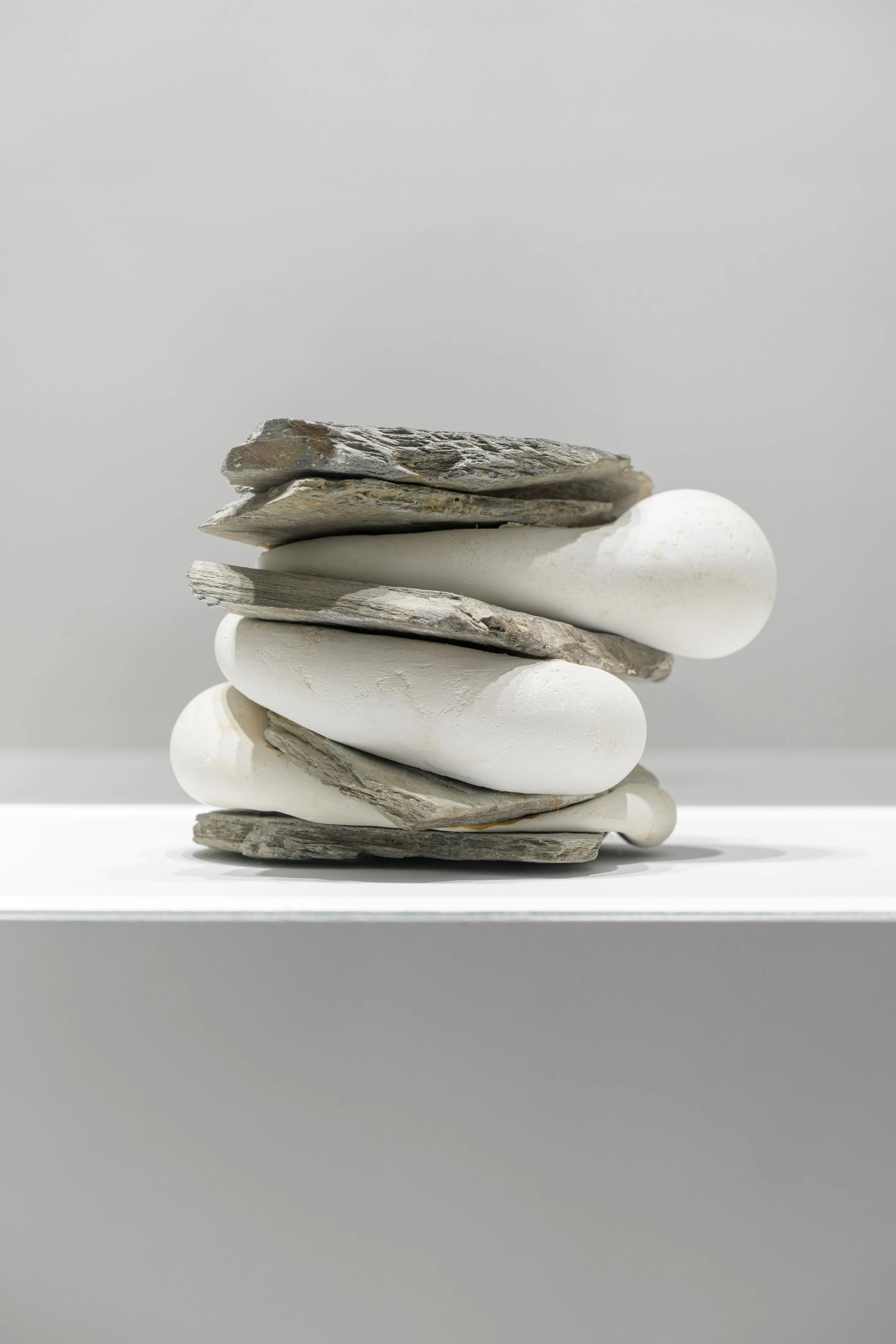
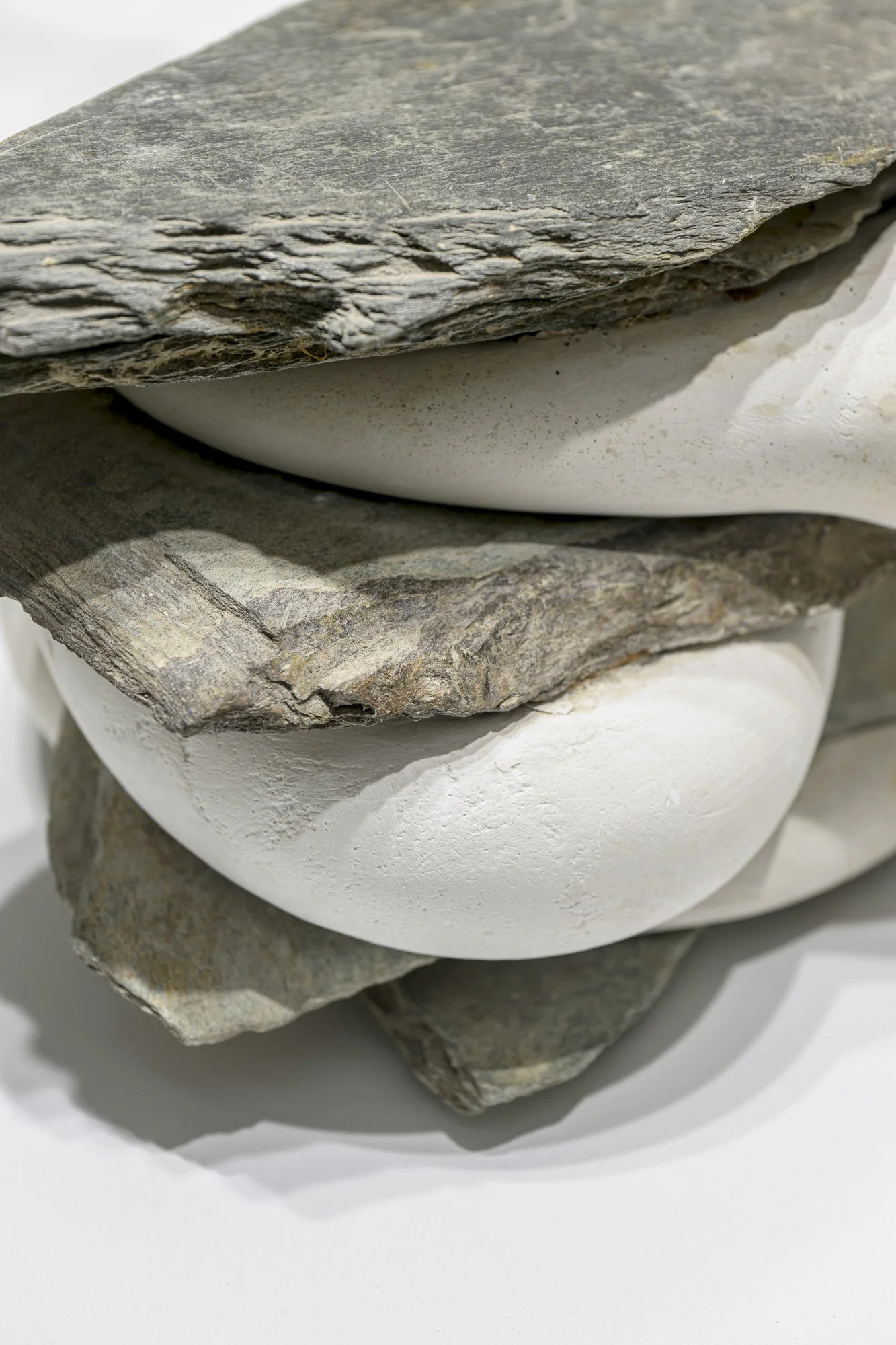
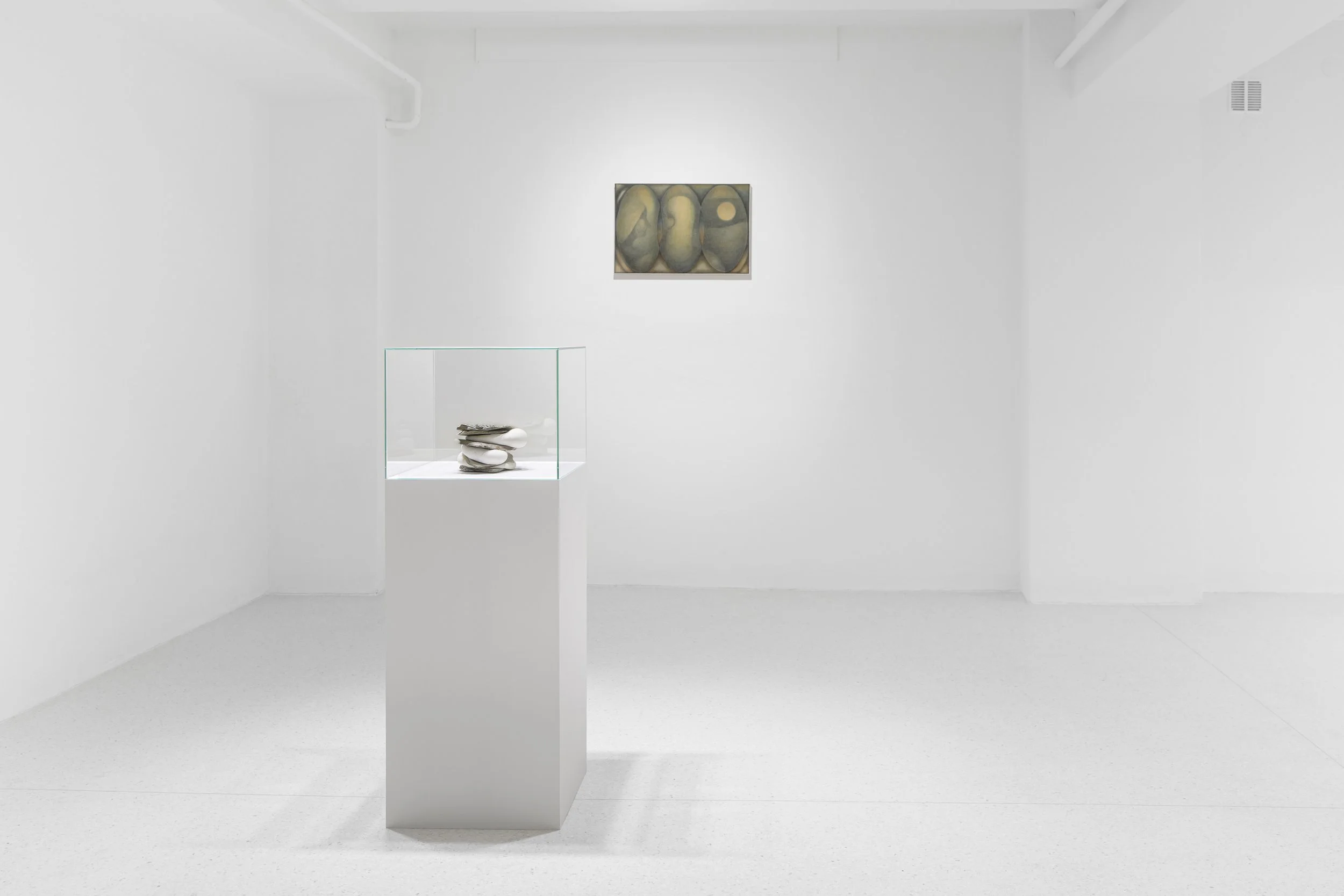
Maria Bartuszová
untitled, AMB 333, 1985
stone and plaster, 23,6 x 17,2 x 11,7 cm
MARIA BARTUSZOVÁ (b. 1936, Prague – d. 1996, Košice) was a Czech-born Slovak sculptor whose practice developed a singular approach to form, material, and process across three decades. Bartuszová is best known for her pioneering use of plaster and her development of so-called “gravistimulated casting,” a method involving the pouring of liquid plaster into elastic forms such as balloons, allowing gravity and pressure to shape the material as it solidifies. This process enabled the emergence of organic, often spherical or ovoid forms that suggest natural phenomena such as raindrops, seeds, eggs, or bodily fragments while retaining a strong sense of material immediacy and fragility.
Drawing on observations of growth, decay, and environmental forces, she conceived sculpture as an extension of organic life rather than a fixed object. From the 1970s onwards, Bartuszová increasingly explored the effects of pressure, binding, and constraint, producing works in which soft forms are compressed, tied, or deformed. Although her work developed in relative isolation, Bartuszová is now recognized as a key figure in postwar sculpture. Her practice has been the subject of renewed international attention, including major institutional presentations such as the retrospective at Tate Modern (2022), which situates her work within a broader history of experimental and process-based sculpture.
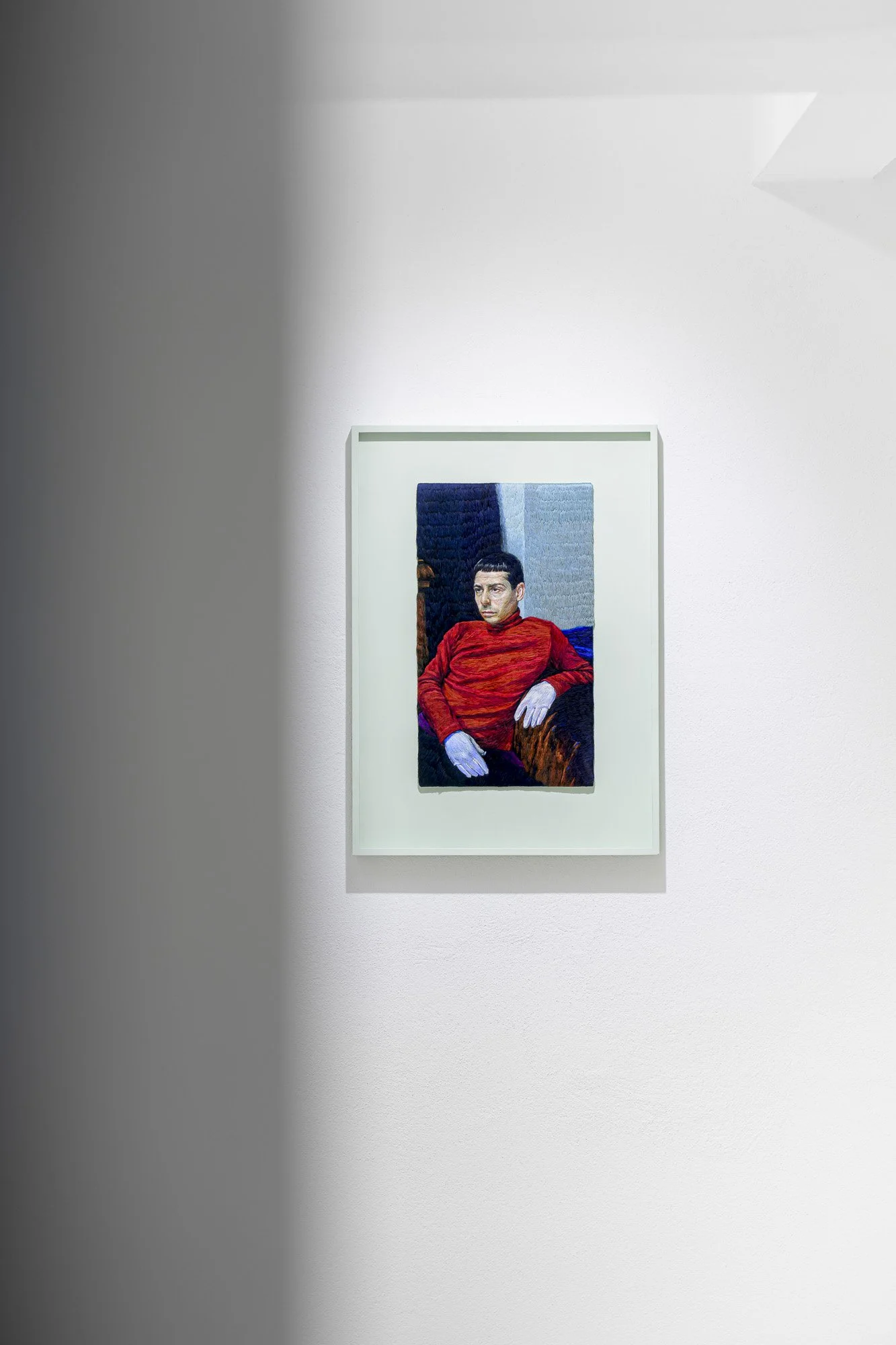
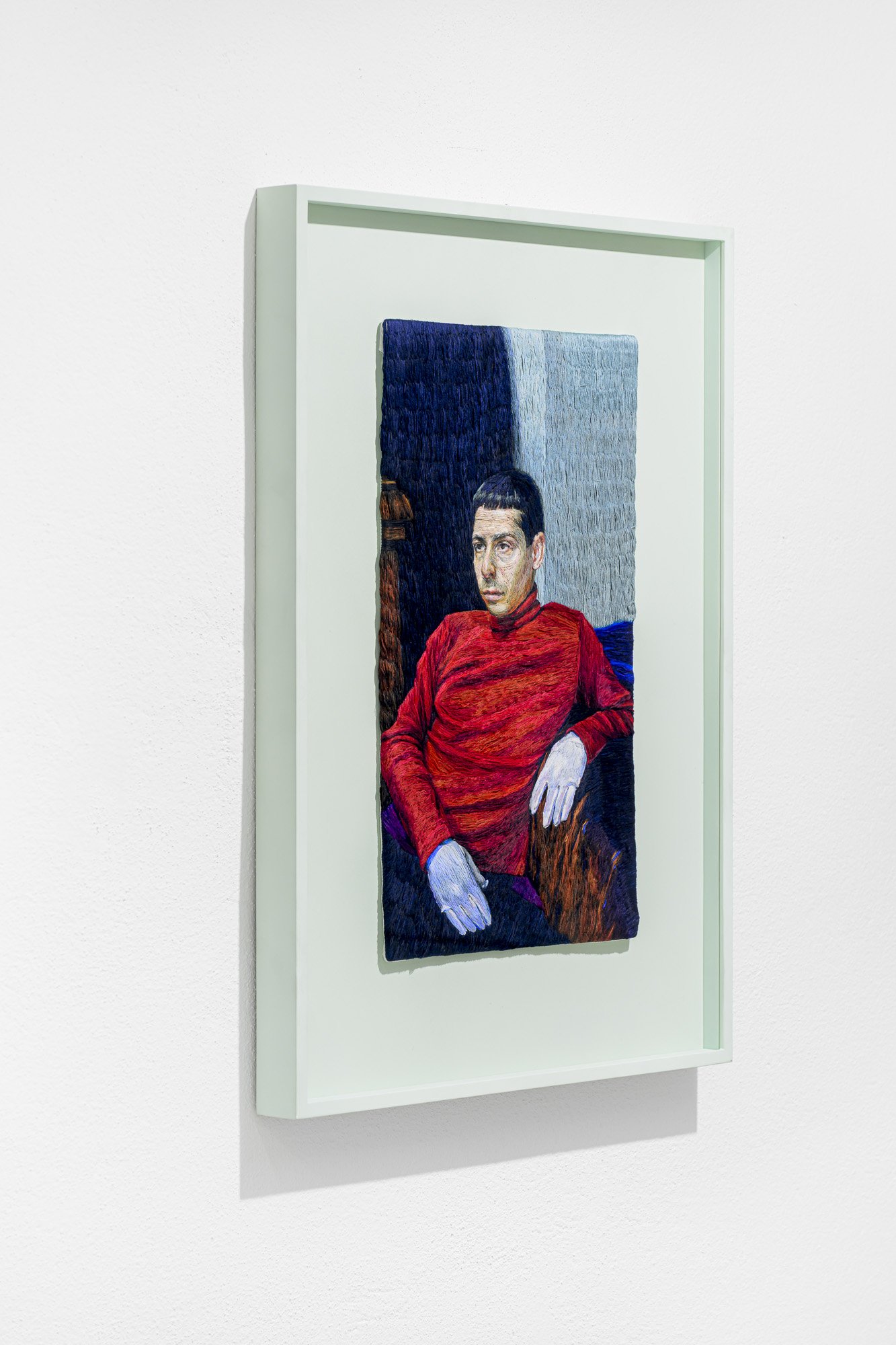
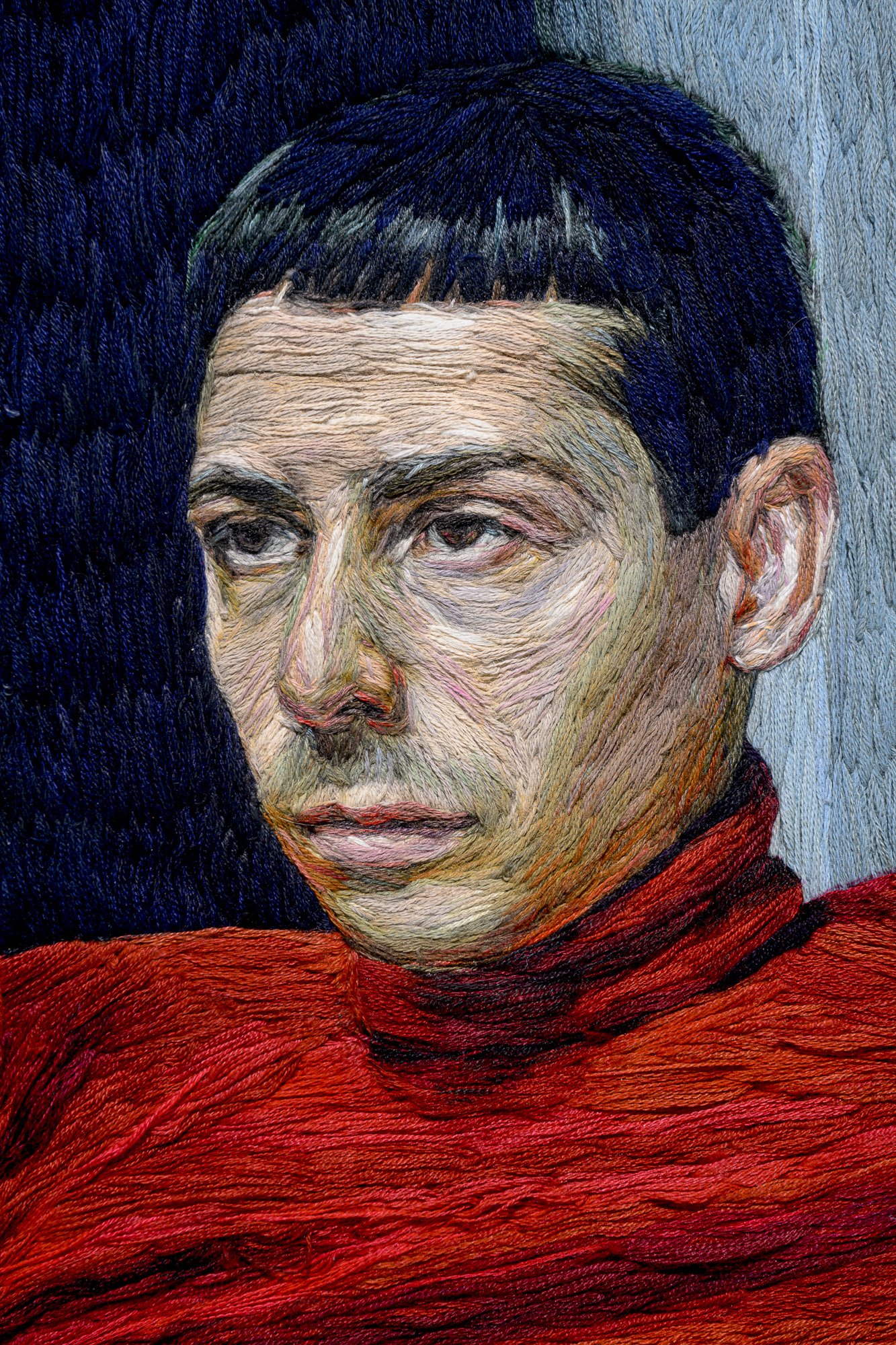
Klára Hosnedlová
Boys Do Not Cry, 2015
embroidery, 92 x 69 cm
KLÁRA HOSNEDLOVÁ (b. 1990, Uherské Hradiště) is a Berlin-based Czech artist working across sculpture, installation, embroidery, and performance. Her practice combines sculptural, textile, and performative approaches into complex spatial environments that function simultaneously as stage and narrative structure.
Her installations form immersive scenographies in which sculpture, textile works, and embroidery are interwoven into a single spatial composition. Performance plays a key role in her process, often occurring in private settings and later translated into photographic material and embroidered surfaces. Sculptural elements function as architectural carriers for textile and embroidered works, where photographic imagery is translated into slow, accumulative surfaces. She has been presented widely in major international institutional contexts, often through large-scale solo presentations. Recent shows include a site-specific commission at the New Museum New York (2026) and a solo exhibition at White Cube (2026), as well as a solo exhibition at Hamburger Bahnhof (2025), Kunsthalle Basel (2024), among others.
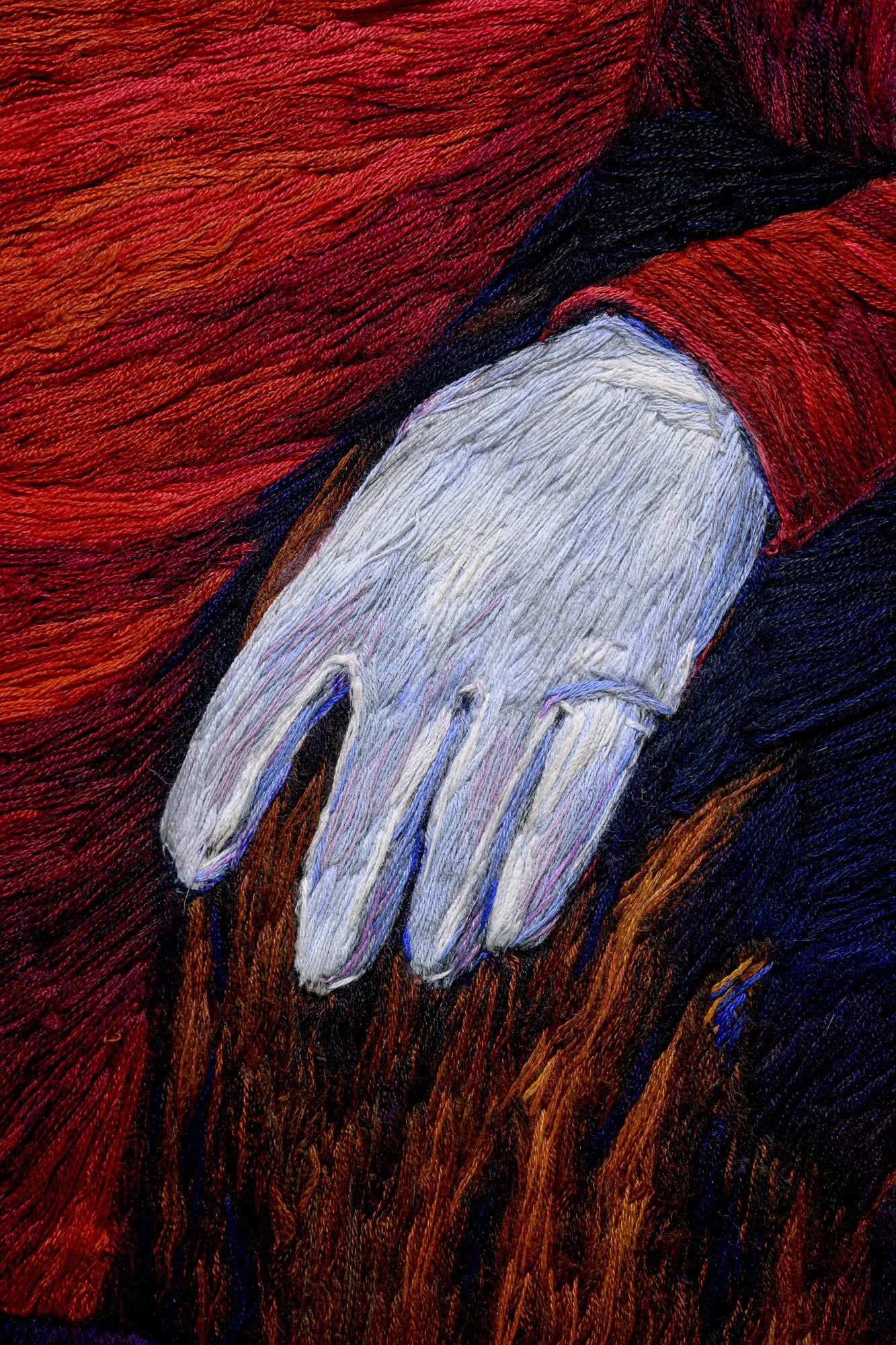
HOLDING HANDS AND CROSSING ARMS IS THE GESTURE OF ELATION.
AN INSTINCTIVE CHOREOGRAPHY OF MUTUAL JOY.
X IS THE STRANGEST LETTER IN THE ALPHABET. WHEN TWO PEOPLE EMBODY IT TOGETHER, THEY CREATE A CONNECTION THAT LINGERS FOREVER.
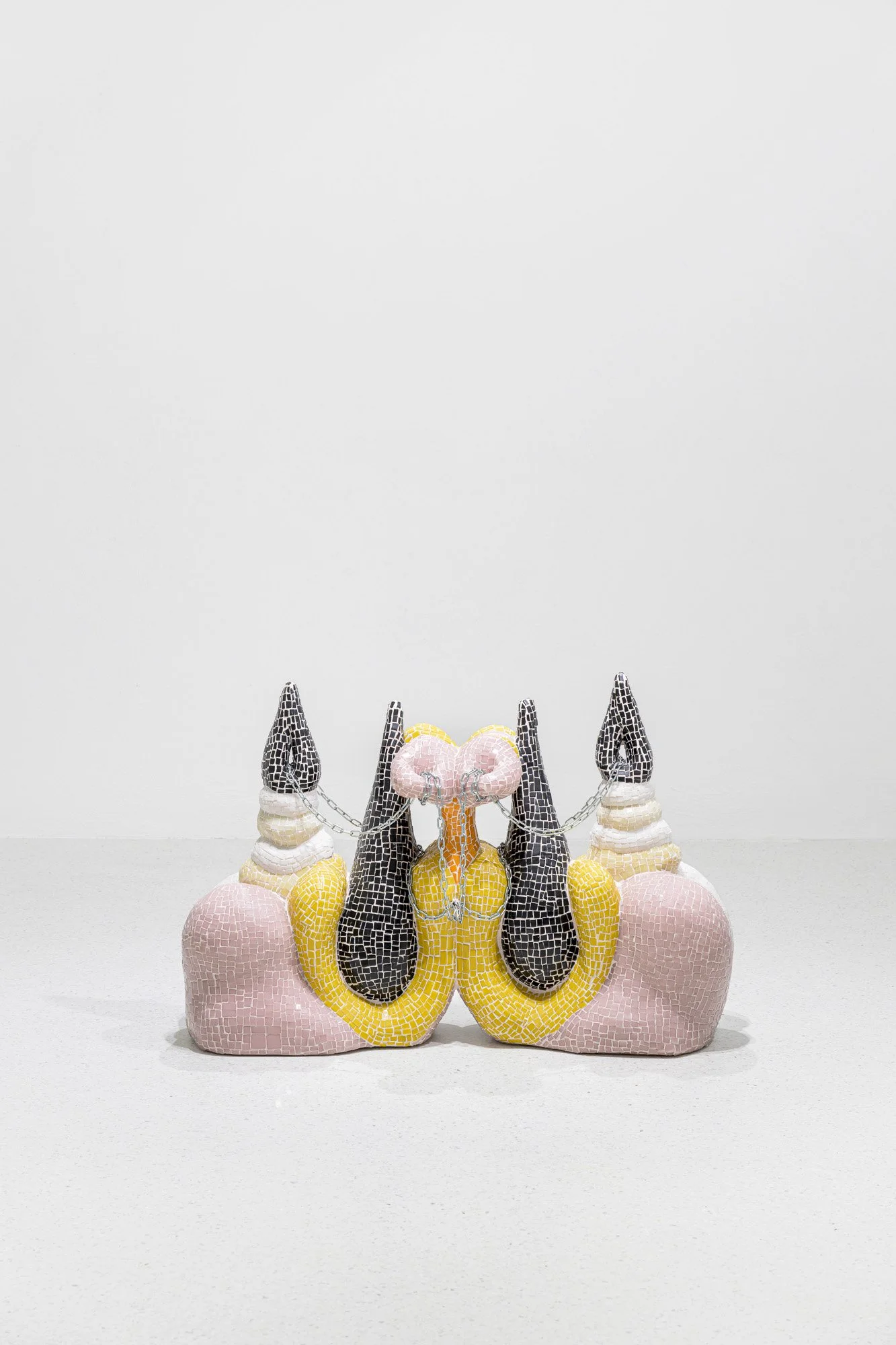
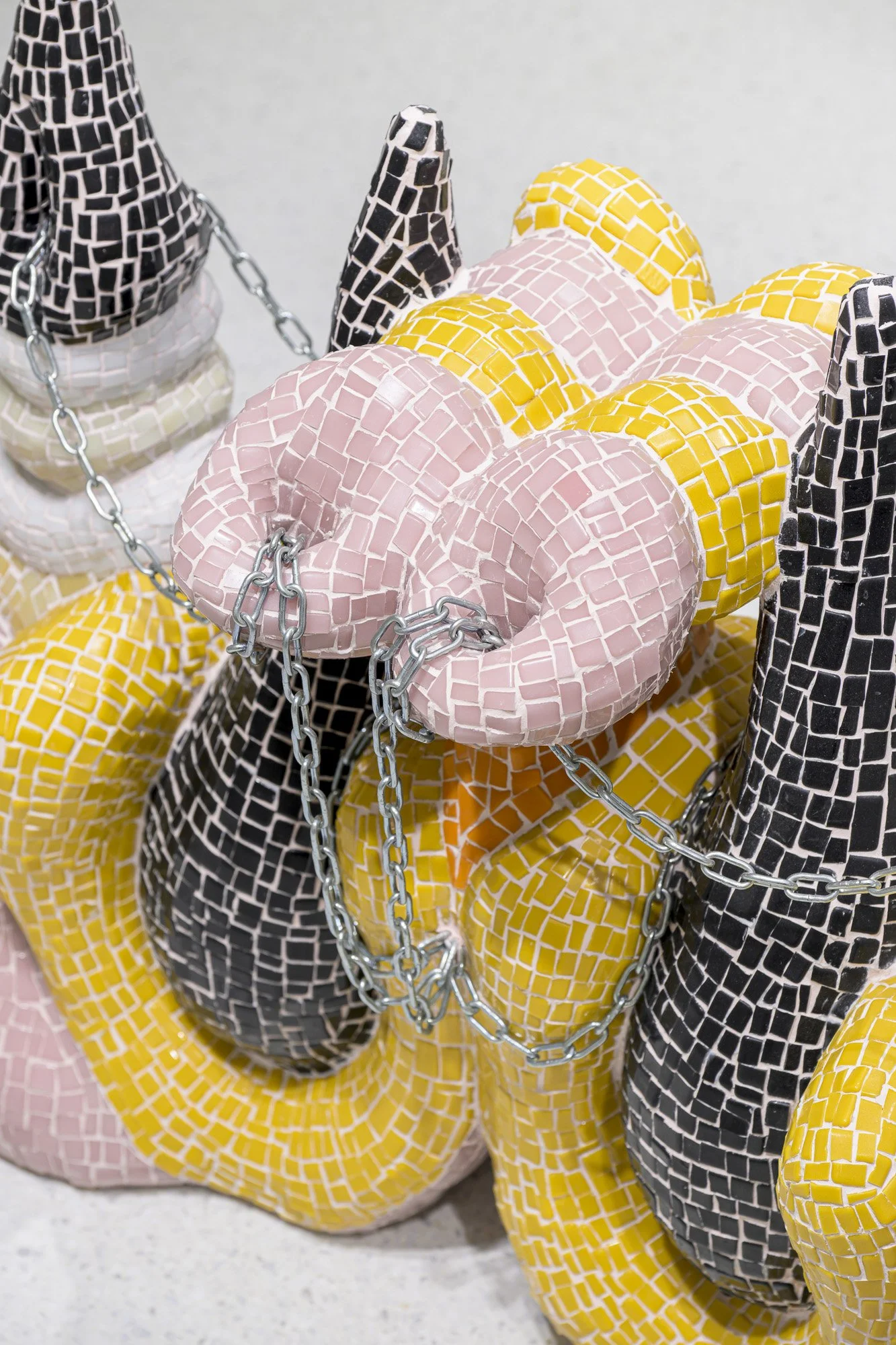
Zsófia Keresztes
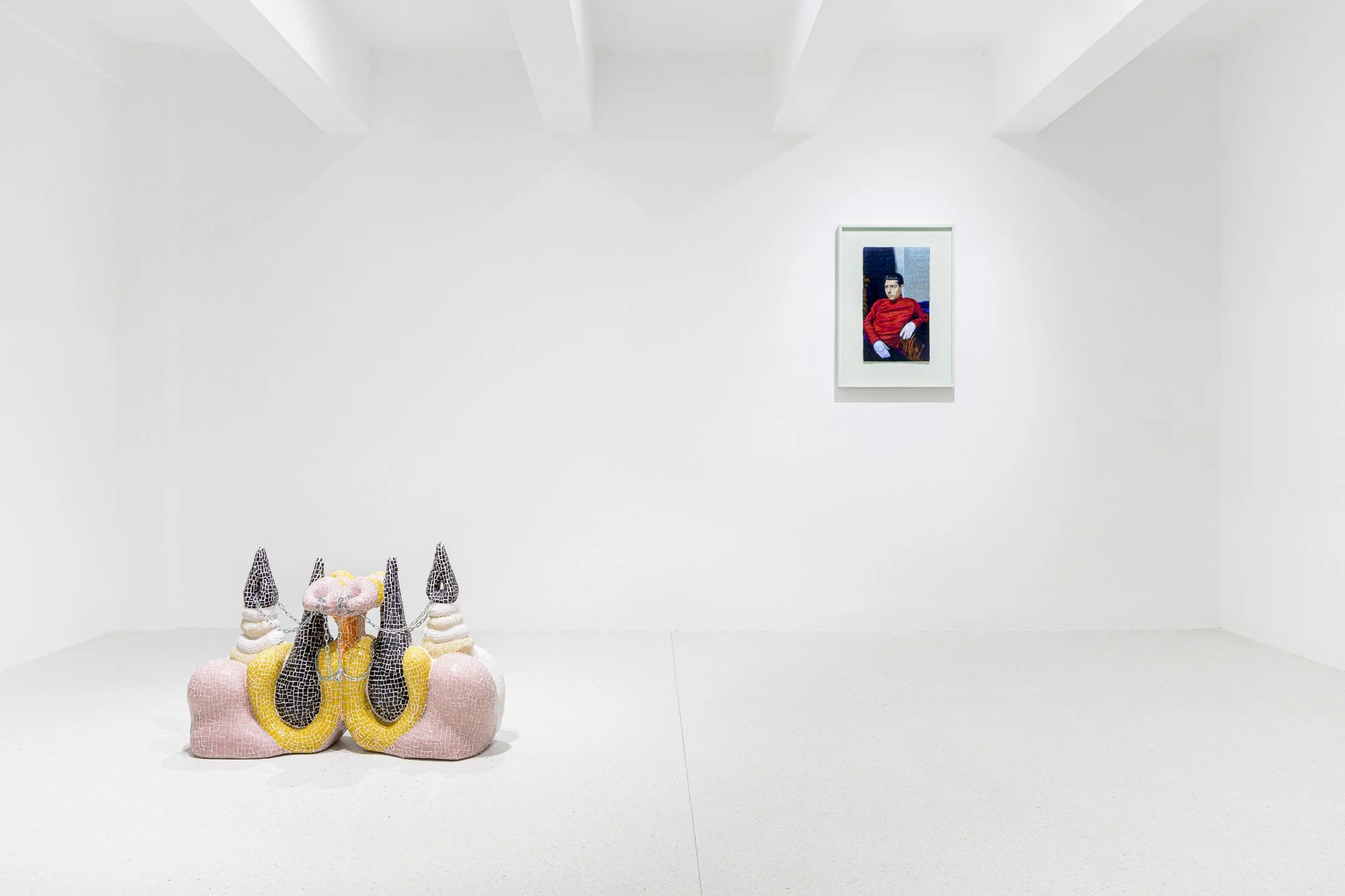
Flames of Estrangement, 2021
glass mosaic, styrofoam, fiberglass mesh, expanding foam, adhesive, grout, steel, 60 × 90 × 27 cm
ZSOFIA KERESZTES (b. 1985, Budapest) is a Budapest-based artist working across sculpture and installation. Her work combines anatomical and organic forms such as roots, trunks, and cocoon-like structures, expressed through mosaics and colored textiles that highlight the tension between fragility and resilience.
Glass mosaic plays a central role in her latest work, where it is transformed into fluid, irregular surfaces that evoke the gloss of internal organs and bodily matter. Keresztes's sculpture entitled Flames of Estrangement can be interpreted as the opening piece of her series centred on the motif of Pierrot, the lonely clown, whose figure was often invoked in the pantomime performances of Commedia dell'arte. In her composition, the shape of the two black teardrops lends the sculpture its character; they weigh down the entire figure and overpower even the yellow moonlight. The black, teardrop-like motifs are repeated in the candle-like formations as well, which end in black flames. The symmetric figure, fusing with its own mirror image, seeks to find its identity and stability in a perpetual cyclical motion. Over the past decade, Keresztes has established herself as a significant figure in contemporary Hungarian art, with a growing international presence. She represented Hungary at the 59th Venice Biennale. Recent solo exhibitions include KÖNIG GALERIE, Berlin (2023), and Ludwig Museum (2022). Her work has also been featured in major international exhibitions, including Centre Pompidou-Metz (2022), or the Baltic Triennial 14 (2022).
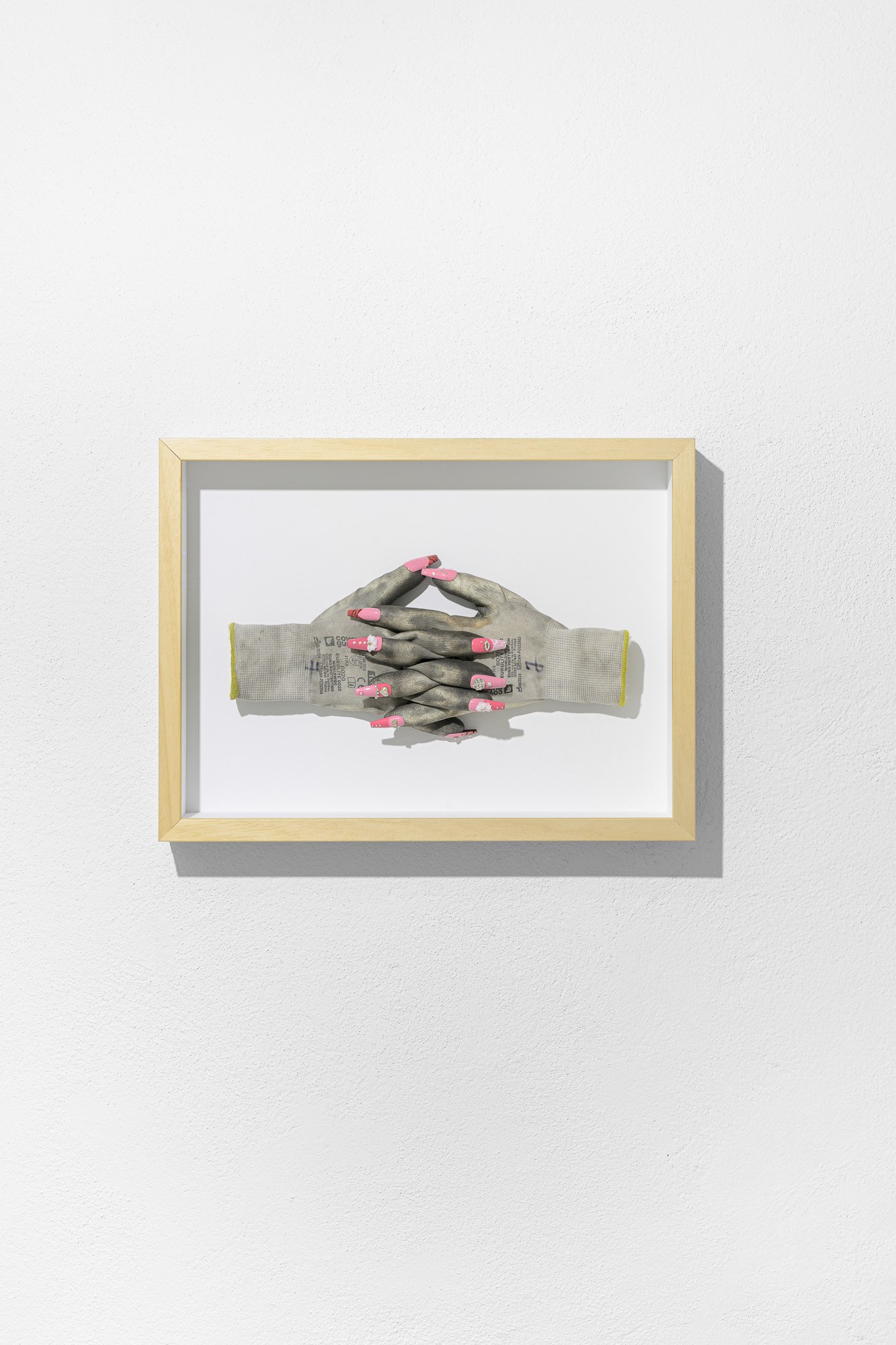
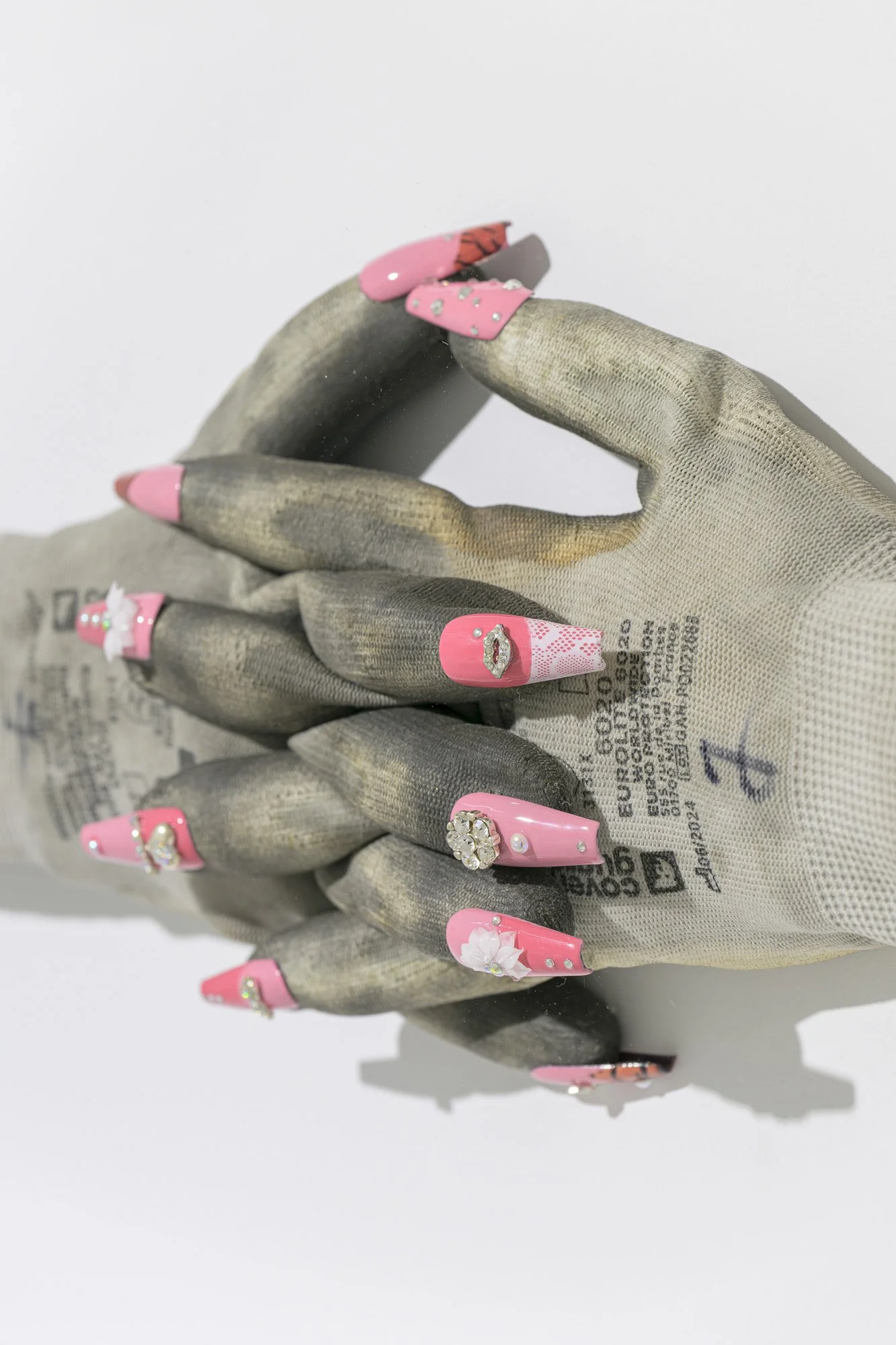
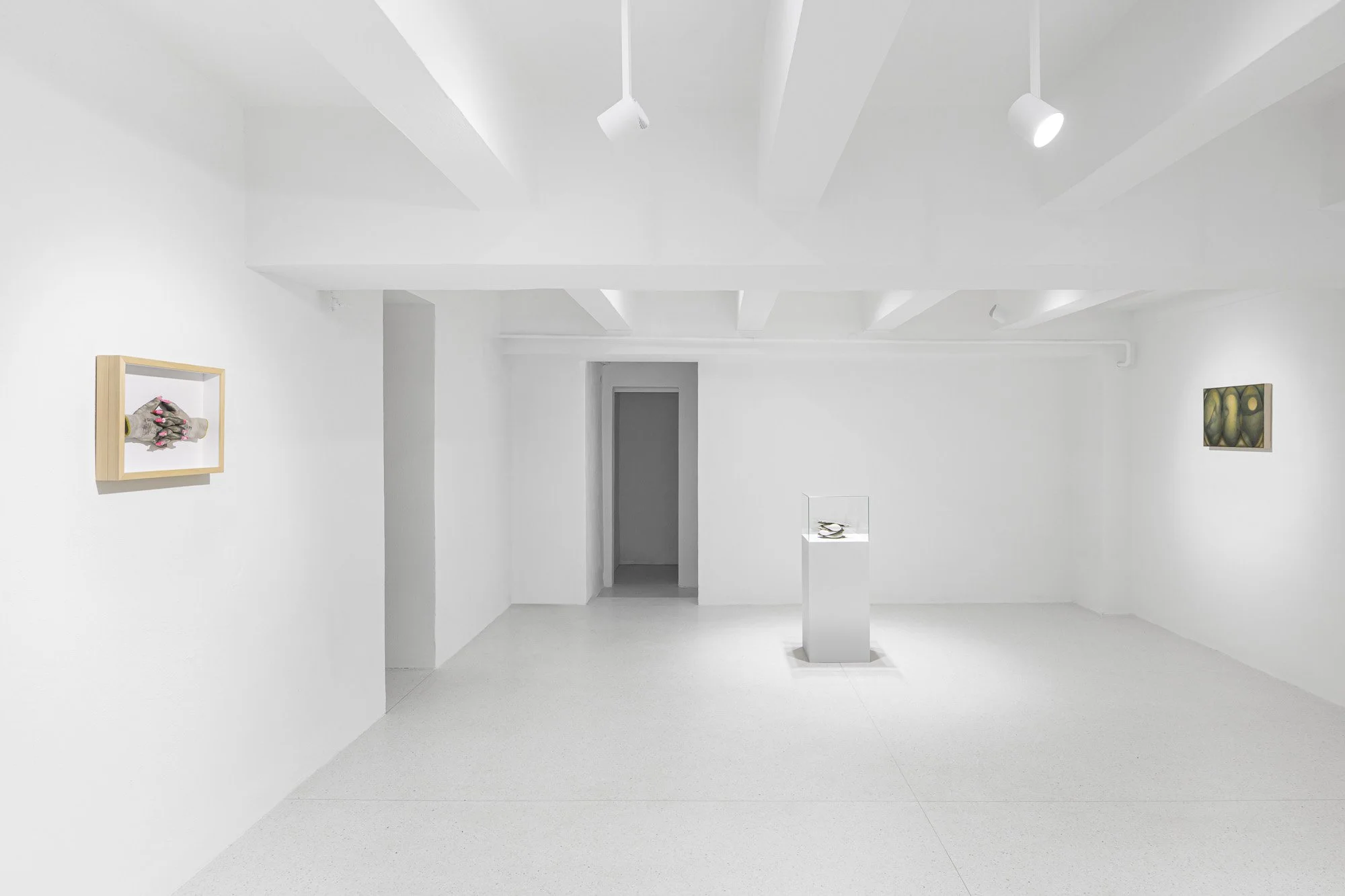
Réka Lőrincz
Balance, 2021
gloves, hand painted fake nails,
40 × 30 × 10 cm
RÉKA LŐRINCZ (b. 1978, Budapest) is a multidisciplinary artist based in Budapest who works in contemporary jewelry, sculpture, moving images, and text. Moving fluidly between disciplines, she approaches these areas not as separate categories, but as interconnected components of a broader, constantly evolving exploration.
In her work, she explores the conditions of contemporary existence through a personal broader perspective, addressing themes such as active participation, productivity, corporeality, and nonlinear systems of cognition. A key element is the understanding of jewelry and objects as mediators between the body, mind, and environment, as forms of communication that make inner states visible. She often combines everyday objects with precious or symbolic materials. Solo and collaborative exhibitions include presentations at Institute of Contemporary Art, Dunaujváros (2026), Kisterem, Budapest (2024). Her work has also been included in numerous group exhibitions, including the Hungarian National Museum (2024), Ludwig Museum (2023), Budapest, Galerie Biró (2022), Munich, Kunstpavillon Munich (2017), and international platforms such as New York Jewellery Week, Schmuck Munich, and SOFA Chicago.
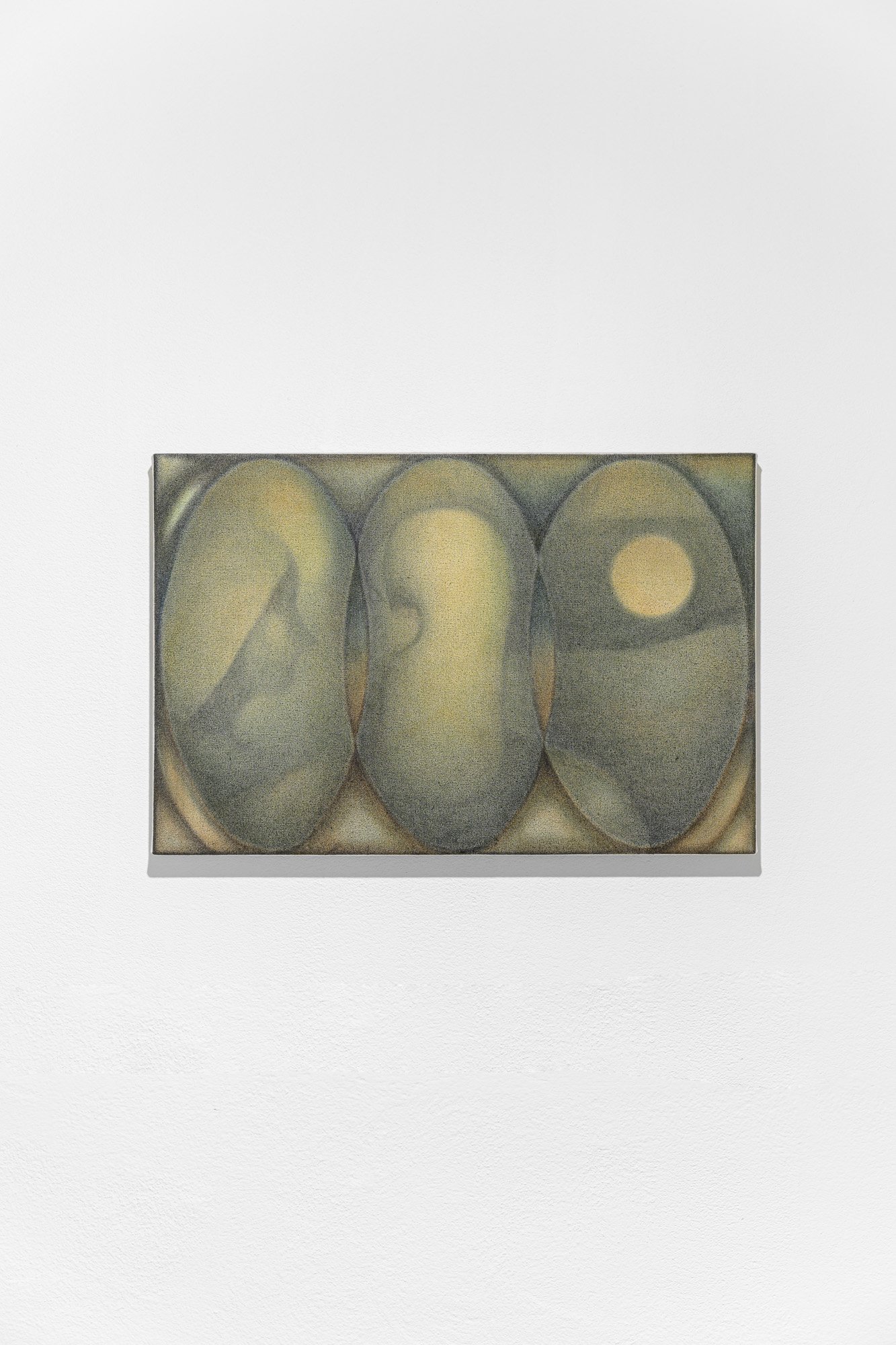
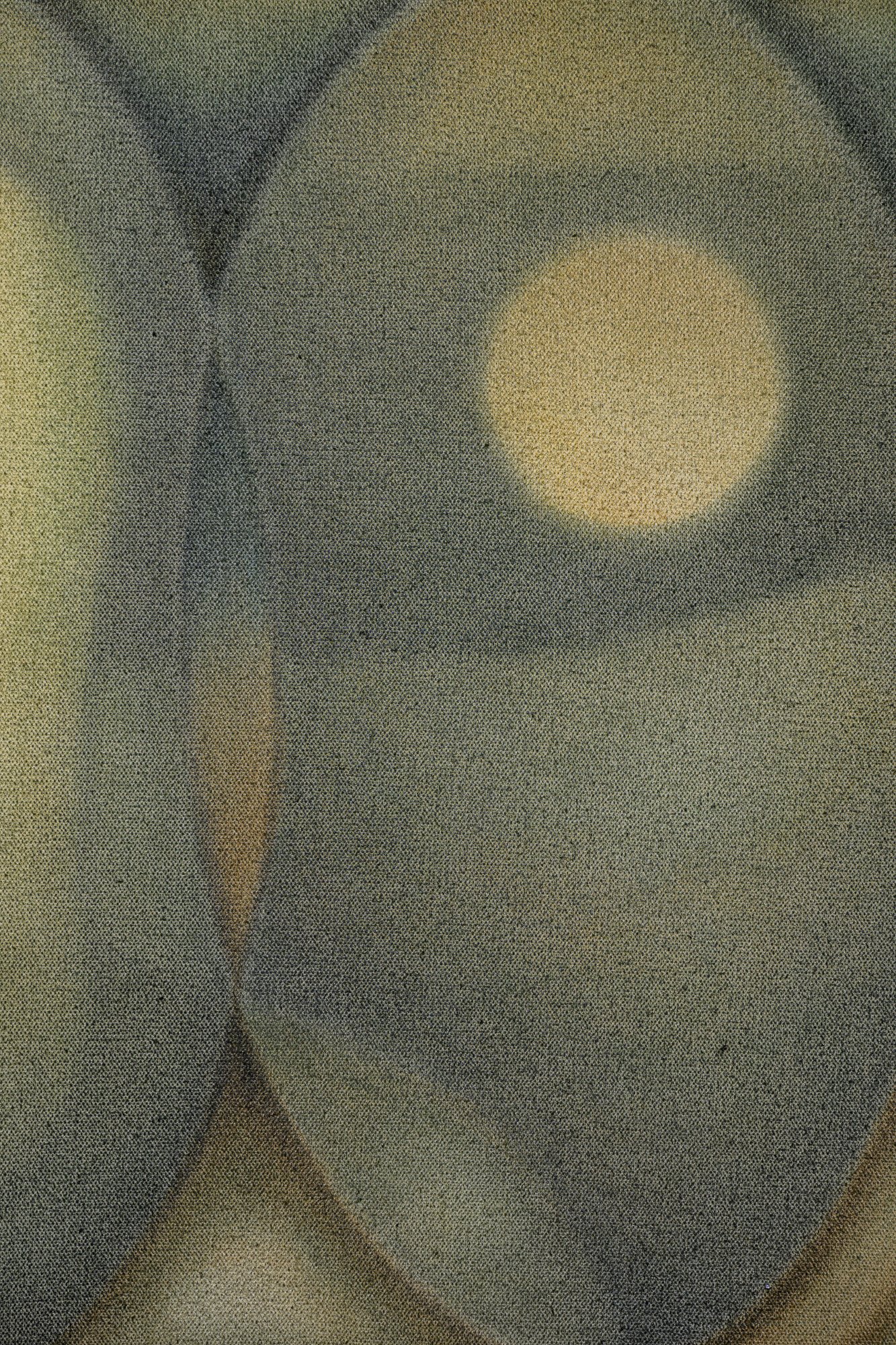
Ljuba Šlechtová
Flames of Estrangement, 2021
oil on canvas
60 x 40 x 4 cm
LJUBA ŠLECHTOVÁ (b. 2003, Prague) is a visual artist based in Prague who works in painting and object art. In her work, Šlechtová explores the perception and structuring of time in society, particularly its acceleration, standardization, and abstraction.
She approaches these phenomena from a concrete, often gender-specific perspective and reflects on the tension between lived, cyclical experience and the imposed linear frameworks that regulate everyday life. She explores the formation of control, productivity, and the individual’s capacity for action, while separating human experience from broader natural rhythms. Šlechtová has presented her work in group exhibitions in Czech republic, and internationally, and has participated in residency programmes such as AQB Budapest. She was a finalist for the Critics’ Award for Young Painting (2025), marking her as part of an emerging generation of artists engaging critically with contemporary conditions of perception and experience.