Matei R. Mai
“Tolerances Of The Human Face”
September 29 – October 31
nico bernath bratislava
Grösslingova 25, Bratislava
Curated by Olívia Ondreičková
nico bernath is pleased to announce “Tolerances Of The Human Face”, the first solo exhibition of Matei R. Mai, presenting a new body of work consisting of paintings and objects.
Matei R. Mai
A=archetype, 2026
acrylic ink, paper and oil on canvas
170 x 120 cm
“Travers walked around the rear gangway, now and then joining in the applause, interested to watch these students and middle aged cinephiles. Endlessly, the films unwound: images of neuro-surgery and organ transplants, autism and senile dementia, auto disasters and plane crashes. Above all, the montage landscapes of war and death: newsreels from the Congo and Vietnam, execution squad instruction films, a documentary on the operation of a lethal chamber.”
(Ballard, J. G., 1970, The Atrocity Exhibition)
The exhibition, Tolerances of the Human Face, takes its title from the chapter of J. G. Ballard’s The Atrocity Exhibition. Ballard found the phrase in a scientific paper by John Swearingen and transformed a technical measurement of the body’s capacity to withstand collision into a title for a fictional world where faces, bodies, accidents, photographs, and media images constantly overlap. The chapter moves through psychiatric patients, medical experiments, crash photographs, documentary film, television news, and manipulated images, treating the human figure as material within a larger system of observation and circulation.
Matei R. Mai
01-MPF, 2026
acrylic ink, oil and beewax on canvas,
120 x 80 cm
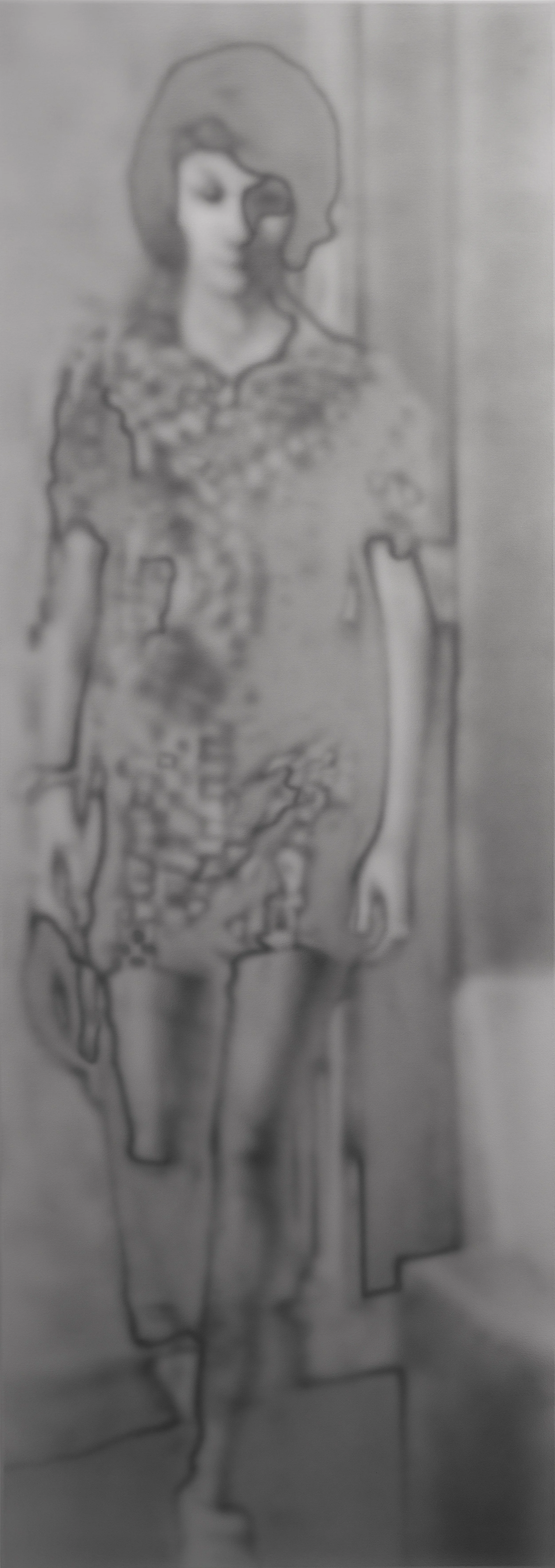
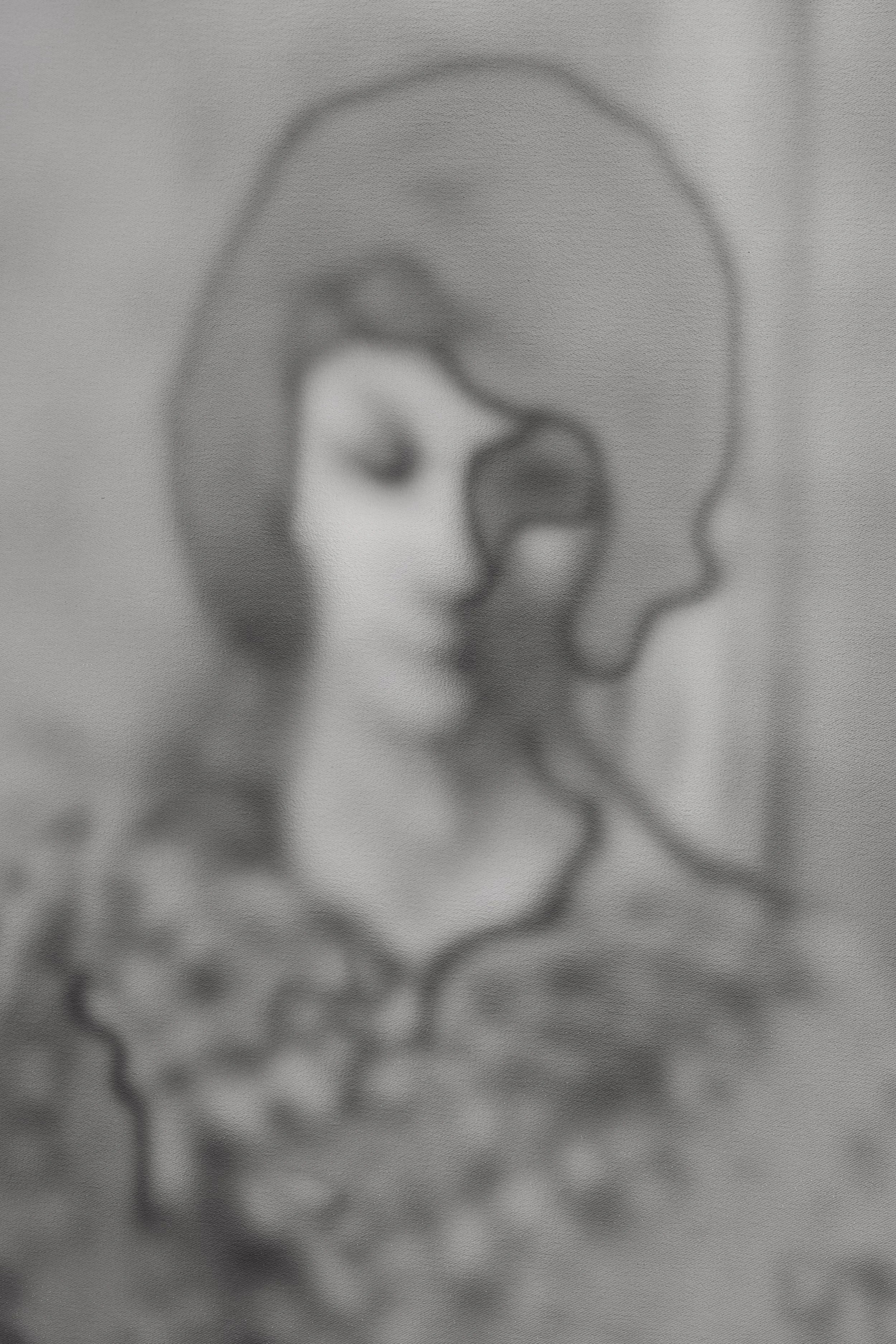
Matei R. Mai works with found interviews from psychiatric archives, where faces and bodies have already been subjected to institutional forms of looking: being photographed/filmed, classified, stored, and reproduced. This mediated encounter parallels Ballard’s interest in accidents as they are experienced through photographs, film, slow-motion replay, and television, where the event becomes inseparable from its image. Mai shifts this condition away from spectacle: rather than depicting the psychiatric subject directly, he paints the archival video-still itself, tracing its passage from institutional record into digital circulation and finally into painting.
Matei R. Mai
THF03LF, 2026
acrylic ink on canvas,
170 x 120 cm
Matei R. Mai
THF02PS, 2026
acrylic ink on canvas,
80 x 60 cm
Hito Steyerl’s concept of the “poor image” (Steyerl, H., 2009, In Defense of Poor Image, Issue #10 e-flux journal) offers a useful parallel here, as Mai’s monochromatic surfaces, glazes, airbrushing, waxing, and scraping translate degraded image data into material form. The steel structures accompanying the paintings introduce a physical framework of storage and containment. Within it, the face remains suspended between document and fragment, recognition and disappearance.The faces remain only partially resolved, emerging through noise-like marks and fragmented information that expose the image’s successive layers of mediation.
Matei R. Mai
THF01S, 2026
ink, acrylic, oil, paper and beewax on canvas,
in steel frame
80 x 60 cm
Matei R. Mai
WF02, 2026
ink, acrylic, paper and beewax on canvas,
170 x 60 cm
Tolerances of the Human Face creates a space between evidence and erasure, the face no longer simply represents a person but becomes the unstable trace of everything that has looked at it, recorded it, damaged it, and carried it forward.
Matei R. Mai
WF01, 2026
acrylic ink on canvas,
170 x 60 cm
Matei R. Mai
As the hands slowly fall apart
2026, acrylic ink on canvas,
80 x 120 cm
Matei R. Mai
FW01, 2026
acrylic ink, oil and wax on canvas,
80 x 80 cm